

A new partnership between Emplify Health by Bellin and Marquette University is aimed at providing better access to mental health care counselors for residents in northeast Wisconsin and the Upper Peninsula of Michigan.
The Resch Mental Health Initiative is a pilot program that provides fully supported pathways for students from education to licensure to employment. Twenty-five students from the region will earn a master’s degree in clinical mental health counseling through the Marquette Graduate School’s online program; they receive supervised training and employment opportunities with Emplify Health by Bellin.
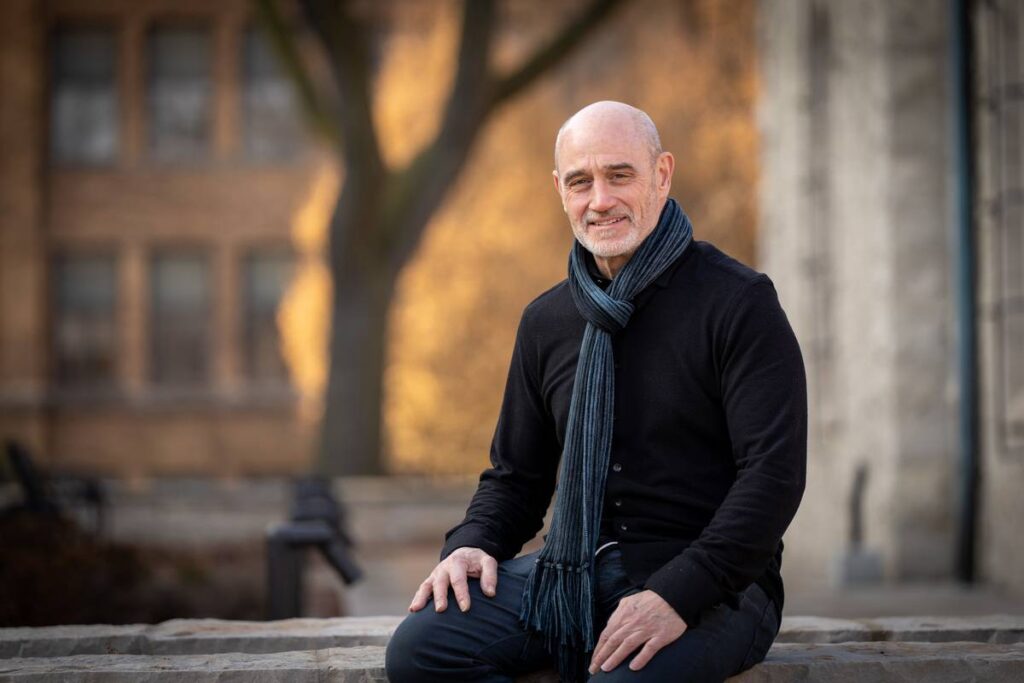
Dr. Alan Burkard, professor of counselor education and counseling psychology, is part of a team from Marquette that’s focused on using the online clinical mental health counseling program to prepare students who live in the area they will serve.
“As a part of that training, students are required to complete field placements,” Burkard says. “All the field placements will be with Emplify Health by Bellin, so they will complete a practicum experience, which is 100 hours, and then they will complete an internship experience which is 900 hours. To become a licensed professional counselor in the state of Wisconsin, students need to complete post-graduation 3,000 hours while under supervision. These hours will be conducted under the supervision of a Emplify Health licensed staff member who has five years of experience as a licensed professional counselor.”
Key program components include:
- Fully funded Master of Science in Clinical Mental Health Counseling: Select students will receive full-tuition coverage and stipend support for a master’s degree, ensuring financial barriers do not hinder their educational journeys.
- Hands-on clinical training: Students will complete all clinical training components, including a paid practicum, internship and post-graduate fellowship at Emplify Health by Bellin locations. This paid, hands-on experience will prepare them to meet the growing demand for mental health services.
- Mentorship and professional development: The program includes dedicated mentorship and professional development opportunities, ensuring students are well-supported and well-prepared to enter the workforce.
- Employment path: Graduates will have an opportunity for employment at Emplify Health by Bellin, providing a clear and secure career path.
- Sign-on and retention bonuses: Additional incentives, such as sign-on and retention bonuses, will further support these professionals in the region.
Bridging the gap
According to Burkard, over the next five years, northeast Wisconsin and Michigan’s Upper Peninsula will experience a shortage of 300 mental health counselors.

Kim Sandstrom, a licensed professional counselor, understands the need for more counselors in the region. For the past 14 years, she’s worked for Emplify Health by Bellin in the Green Bay area — she will oversee the students who go through the counseling program.
“The students will do their practicum and three internships with us,” Sandstrom explains. “I’ll be mentoring them through the program from start to finish.”
Sandstrom says that during the internships, students will be able to experience a wide range of mental health specialties through the provider’s psychiatric hospital for children and adolescents, the adult unit, intensive outpatient programs, dialectical behavior therapy and more, so that they find an area that interests them.
For decades, mental health advocates like Sandstrom have been helping to break down longstanding mental health stigmas, such as feelings of shame or weakness when seeking mental health help. She says the education used to extinguish stigmas is working— that’s one of the reasons there’s such a need for counselors.
“We do have more people coming to therapy, and now we don’t have the therapists to accommodate all the people wanting help,” Sandstrom explains. “I think we’ve come a long way when it comes to breaking the stigma, but there’s still so much further to go, even in the cities. We forget that we all go to the doctor if our hip hurts or if we have a headache. But when it comes to our mental health, that becomes a little more challenging for people.”
And it’s not just northeast Wisconsin and Michigan’s Upper Peninsula that face a shortage of mental health care providers. According to the National Alliance on Mental Illness, nearly 37 million rural Americans live in an area with a shortage of mental health professionals.
“Thanks to the incredible generosity of The Richard J. Resch Foundation, we can remove longstanding barriers to educating more mental health providers to serve our communities,” said Debbie Patz, vice president of Emplify Health by Bellin Behavioral Health. “We are profoundly grateful for this gift, and to our Marquette University partners for thinking big about ways we can achieve our goals together.”
Although still in its infancy, there are plans to grow the program.
“Our intent is to look for other foundations or donors to be able to expand this project and continue to build on this idea,” Burkard says. “There’s interest in expansion, and we also see the possibility of expanding to other regions of Wisconsin including the central and northern parts of the state by partnering with other health care organizations and institutions in those areas.”
For more detailed information or specific inquiries about the program, please contact The Bellin Health Foundation at TheBellinHealthFoundation@bellin.org.
Interested students may access more information here or contact Graduate Admission Counselor Jordan L. Mason at (414) 288-0327 or jordan.l.mason@marquette.edu.