“These are God’s children.”
Braden Wolthuis does not ask what the patient lying in front of him has been charged with, nor does he encourage others to seek that information. He does not care about the merits of their defense, nor how a judge ruled. When incarcerated individuals are in front of Wolthuis, they are simply humans.
“Somebody somewhere loved them at some point in their life, whether it’s their mom, grandparents, friend, girlfriend, boyfriend, significant other, spouse, it doesn’t matter,” Wolthuis says. “They are a person, and they are worthy of our care.”
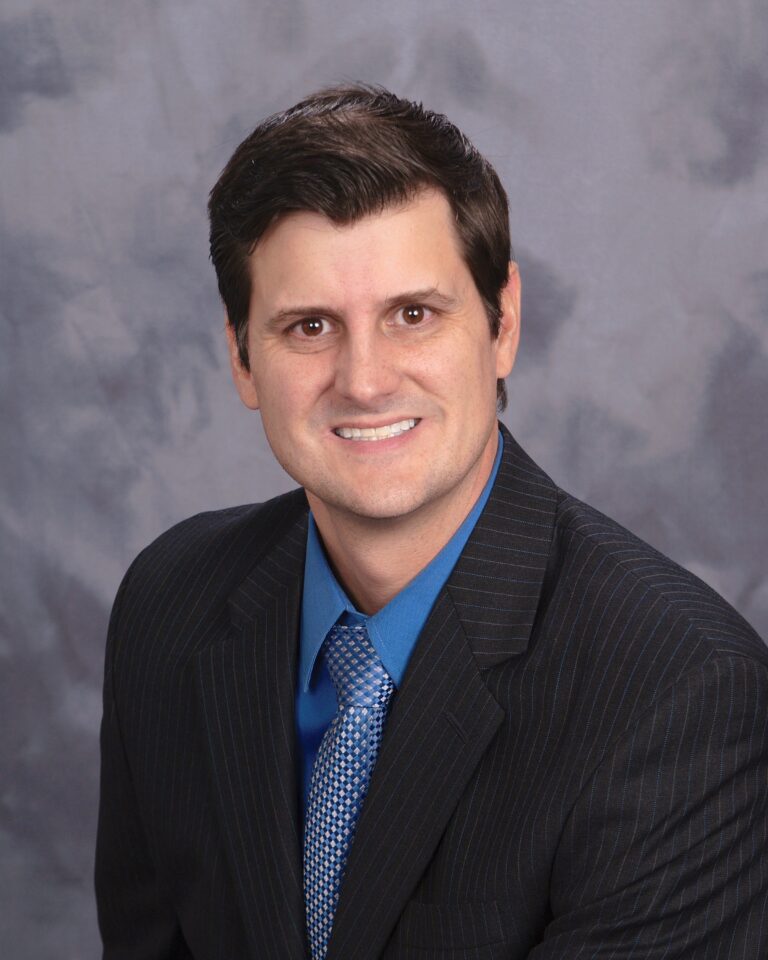
Wolthuis fine-tuned this empathic approach when he attended Marquette’s Master of Science Direct Entry Nursing program. The architecture graduate pivoted into health care with the help of Marquette’s accelerated pathway to registered nurse licensure for second degree students. He is now vice president of operations of the western region at VitalCore Health Strategies in Ogden, Utah, which provides health care to incarcerated individuals.
Drawn to the program’s curriculum, Wolthuis ultimately resonated most with Marquette Nursing’s philosophy on care.
“I absolutely loved being at a Jesuit university,” Wolthuis says. “I subscribe to the same mission and values that guide the university, and I’ve always tried to put those into practice by serving underserved communities.”
In a Q&A with Marquette Today, Wolthuis shares the challenges and rewards of caring for one of society’s most vulnerable populations.
Architecture to nursing is sort of a sharp turn in your career path. Was that a jarring transition?
Not necessarily! All throughout high school, I excelled at the sciences. Even before my time in nursing, I toyed with doing something in the medical field. A couple of times, I had pursued either going to medical or dental school. I also have a right brain, and I really like creativity and expressing myself through art. I still do that as a side hobby.
What are some skills and traits you’ve acquired as a nurse that have proven to be useful in a leadership role?
Nurses are specialists in their field. I can’t tell you how many times I was challenged by faculty at Marquette to think deeper and more critically. Go back, look at the patient’s chart, look at labs, look at what’s historically going on with the patient and think critically about their care. That same process helps me greatly in solving administrative problems. Talk to the stakeholders, get as much information as you can and then discuss solutions.
What are some of the most important lessons you draw on from your time at Marquette?
Marquette Nursing taught me so much that makes me a better administrator. It taught me how to gather information in an empathetic way. Marquette also trained me to work collaboratively, which is useful because I’m constantly working side by side with medical directors and correctional officers.
How do the cases you see in a carceral setting differ from the general hospital population? Are there particular health problems that are over-represented?
We encounter everything. This is what’s so exciting about the field of correctional medicine — you see everything. It’s not like working in a hospital on a specialized unit where you’re working on a cardiac floor and just seeing cardiac patients all day. We see patients where you’re just managing their blood pressure or their blood sugar, all the way to patients who have cancer. They could also have gastrointestinal issues. We get patients who walk in our door who have had colostomies. We’ve had patients who are on dialysis. We have patients who are actively getting chemo and radiation at the hospital that we have to facilitate and manage. We have patients who are pregnant. It’s an exciting area of medicine, because you really get to use all your nursing skills.
Health is inextricably tied to economic, housing and social status, particularly with prisoners. How do those things manifest in your work and the cases you see?
We deal with acutely sick individuals when they walk through our doors, and they are extremely underserved when it comes to medical care. Maybe they’re homeless or jobless and don’t have access to a primary care provider. Maybe they haven’t been to a provider in many years. It’s possible they’re not on their medications because they can’t afford them. Their health care plan is going to the emergency department when they’re sick.
What is it about practicing in jails that keeps you fulfilled?
What keeps me going is I know that I’m providing a needed service to these individuals that they otherwise wouldn’t get. I’ve seen a patient just this week who has stage four colon cancer. I had a discussion with them; they were supposed to start radiation and chemotherapy months ago, but they didn’t have insurance. We can get them into an oncologist and get them the treatment they deserve. It’s gratifying to know that you made a difference in their life.