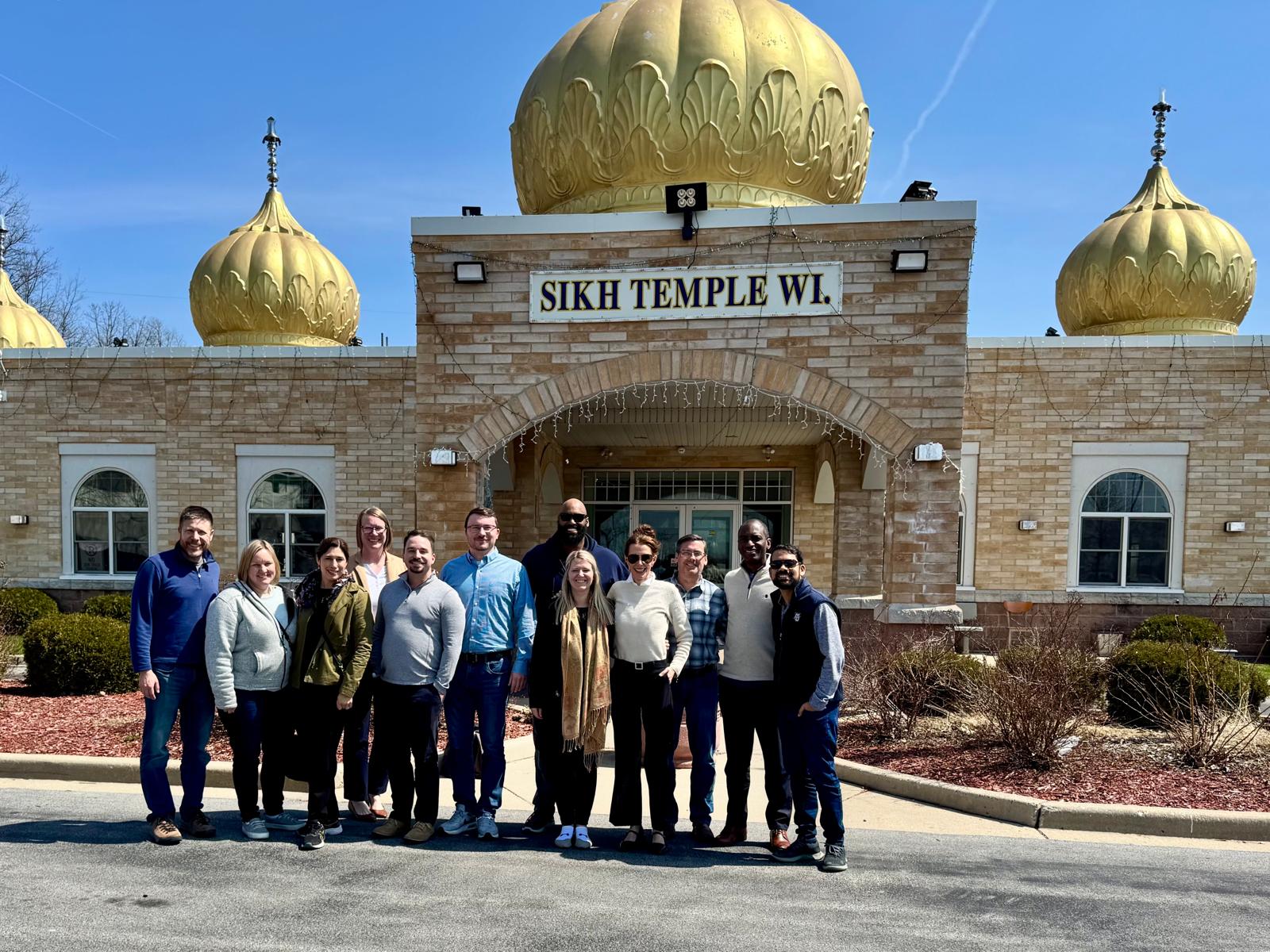
The 12 Marquette students who walked into the gold-domed gurudwara in Oak Creek, Wisconsin didn’t know much about the Sikhs who practiced their faith inside but were eager to learn. The first thing they found out is that nobody leaves a Sikh temple hungry.
“The temple provides lunch to anybody who comes in, totally free, no expectations of donations or anything,” says Parth Bhansali, a Class of 2025 Executive Master of Business Administration student. “We weren’t expecting to be offered lunch, but they had it all set up for us.”
Bhansali and his classmates were part of a certificate program in leadership offered through Interfaith America, a nonprofit organization that promotes faith-based learning and understanding. Students in the course completed an online course, then did a full day of in-person learning during which they visited a Sikh temple and the Islamic Center of Milwaukee. Along the way, students reflected on what faith meant to them and grew closer to one another through open discussion sessions.
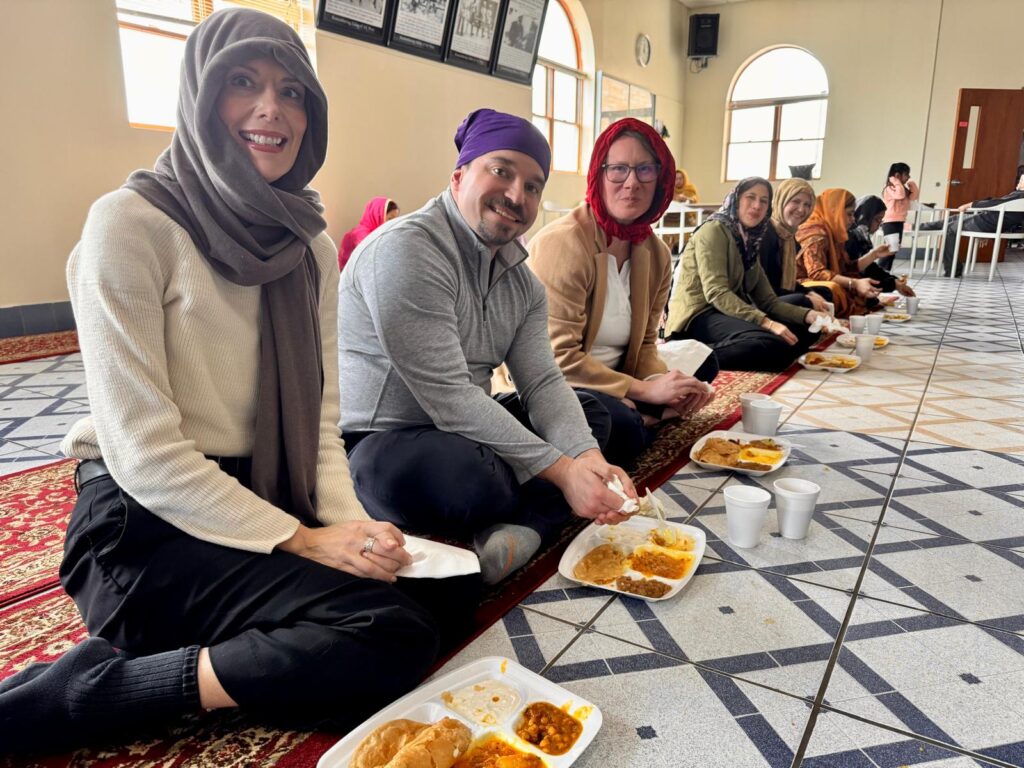
“It deepened the trust and connection within our cohort in unexpected ways,” Bhansali says. “When you talk about faith, it helps open doors, because now people understand a lot of things about each other in a whole new way.”
“I realized that there was this whole other part of the Milwaukee community that I knew very little about, and I think taking the chance to be more curious gave me a great opportunity to improve my leadership skills,” says Corrine Mitchell, a fellow EMBA student.
The EMBA puts students with leadership aspirations together for a 17-month accelerated program. Participants learn in a group, meeting every other Saturday in O’Brien Hall to take classes and share insights. U.S. News and World Report ranked Marquette’s program among the 20 best in the country.
While interfaith education is not typically included in the EMBA curriculum, Bhansali thought it was important enough to ask program directors Dr. Melissa Shew and Dr. Kevin Walsh for help. The two instructors agreed to assist; Shew even came in on one of the program’s free Saturdays to deliver lunch. Associate Professor of Practice Dr. Alex Milovic also made the course an optional project in his spring semester marketing class.
“Being able to nurture a workplace that’s accepting of other traditions is great. Leaders need to be able to understand and listen to people.”
Ryan Dietz, EMBA student
Bhansali led the certification process, arranging the in-person visits and creating the course agenda, among other responsibilities.
Spreading the word about interfaith education is a personal mission for Bhansali, who has experienced workplace insensitivity about his Hindu faith before. He recalls a time where his company held an important meeting to celebrate the success of a project Bhansali worked on during Diwali, which meant he could not attend. However, other, more positive experiences showed the power of inclusivity.
“I remember working for a small manufacturing company and within my first week, in October, they invited me to Diwali celebrations,” Bhansali says. “They had an entire meal for the corporate office of Indian food and they explained why people ate it and how they celebrated with their families. I felt so seen.”
Although Marquette is a Catholic, Jesuit institution, the participants come from varied faith traditions. Ryan Dietz, one of the other students who took part in the training, has a Jewish mother and celebrated Passover as a child. He’s now a Christian, but just as eager to learn about and accommodate other faiths.
“Being able to nurture a workplace that’s accepting of other traditions is great. Leaders need to be able to understand and listen to people,” Dietz says.
While the EMBA cohort is already close, attending Brewers games and celebrating birthdays together, the students in the interfaith leadership course grew even tighter. In between spoonfuls of aloo gobi, an Indian potato and cauliflower curry, everyone asked questions about Sikhism to the temple attendees. The Islamic Center of Milwaukee featured similarly intimate conversations with Executive Director Othman Atta, a Marquette Law graduate.
Afterward, students talked with each other about their own faiths.
“A lot of my classmates opened up about where they came from as a child, how they were raised, and how that’s played out in their career,” Mitchell says. “It was a beautiful moment of vulnerability because those are not conversations we would have had organically as a class. We needed this specific setting to do these exercises together.”
“We’re taught to not talk about politics or religion, but when you talk about faith in this way, you actually deepen relationships between each other.”
The EMBA puts strong emphasis on community-based partnerships within Milwaukee, encouraging students to use the knowledge they’ve been given to benefit society. Interfaith education is an extension of this theme. By speaking with spiritual leaders and reflecting on their own faiths, EMBA students become more empathetic, well-rounded professionals.
“This work is so instrumental for business leadership and I’d love to see this evolve in future iterations of the EMBA program,” Bhansali says.