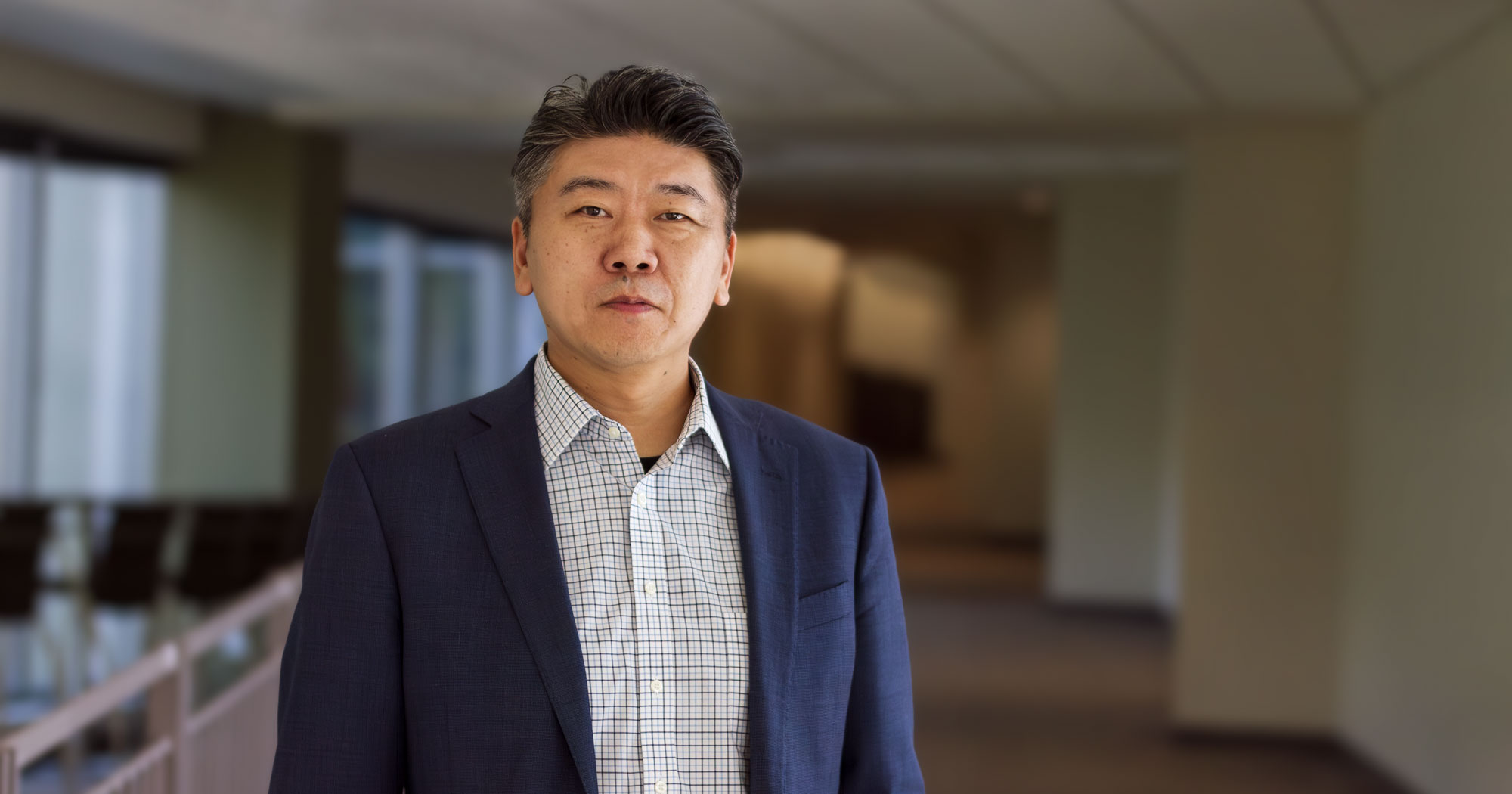
Dr. Hu Yang was named chair of the Marquette University and Medical College of Wisconsin Joint Department of Biomedical Engineering in July, taking on the role following a nationwide search from both institutions to find the department’s next leader. Hu was also appointed as a professor with tenure and awarded the Dr. Robert D. and Dr. Patricia E. Kern Professorship in Biotechnology and Bioengineering Endowed Chair.
Yang previously served as chair, professor and the Linda and Bipin Doshi Endowed Chair in the Linda and Bipin Doshi Department of Chemical and Biochemical Engineering at Missouri University of Science and Technology in Rolla, Missouri.
In a Q&A, Yang shares more about himself and his vision for biomedical engineering education and research at Marquette and MCW.
What excites you most about joining Marquette and the Medical College of Wisconsin?
This joint department is unique as it brings together two great institutions. What I am looking forward to most is building a robust platform to develop the next generation of leaders, innovators and the medical workforce, and to establish it as a hub of innovation and translational research.
I am already observing how innovative our researchers can be because our clinical settings and research labs are so well connected. This same connection influences our classrooms, and I see our biomedical engineering students have a clear understanding of how their work can impact real clinical outcomes and patients.
Our faculty conduct research at Marquette, MCW and the VA Medical Center, uniquely leveraging the strengths of medical research across the greater Milwaukee area. Joint efforts with more than 50 secondary faculty — representing clinical, dental, basic science and engineering expertise — make our research and education especially impactful.
This joint department feels like the perfect environment for biomedical engineers to learn and innovate collaboratively.
What trends do you see in how the field of biomedical engineering is evolving?
The field of biomedical engineering has been changing steadily. As an interdisciplinary field, it stays at the forefront by creating new tools, devices and products that improve people’s lives.
I see a growing trend of integrating AI and machine learning into biomedical engineering education, research and innovation. We are already leading this work in our department’s classrooms and laboratories, so it is exciting to be at the cutting-edge of this.
I also see increased opportunities for applying biomedical engineering in outer space, which I expect some of our own students may lead in the years ahead.
Could you share more about your research and the types of problems you are helping to solve?
My research area is drug and gene delivery. My lab is developing new drug delivery systems and fabrication methods that are being tested for treating glaucoma, atherosclerosis and cancer, specifically head and neck cancers, brain cancer and breast cancer. It is rewarding to work on solutions that could make a difference for patients and families, and I am looking forward to collaborating with more faculty and students here in Milwaukee.
Could you tell us a little about your family and any hobbies outside of work?
I am married with two children. My wife specializes in strategic leadership and operations within the pharmaceutical and biotechnology sectors. My daughter just began her first year in college, and my son is a 7th grader. I can’t forget our corgi, Winnie. I enjoy spending time with my family, and we especially like traveling, trying new foods, and watching movies together. These activities give us a chance to relax, recharge, and develop shared memories together.
Students, faculty, staff and collaborators are encouraged to get in touch with Dr. Yang via email at Hu.Yang@Marquette.edu.