The students affectionately called him “Mr. Gabriel.” Each day for a week last spring, the former architect traveled hours through his native Belize to a clinic where a team of Marquette Occupational Therapy students aided in his recovery following a stroke he suffered months prior.
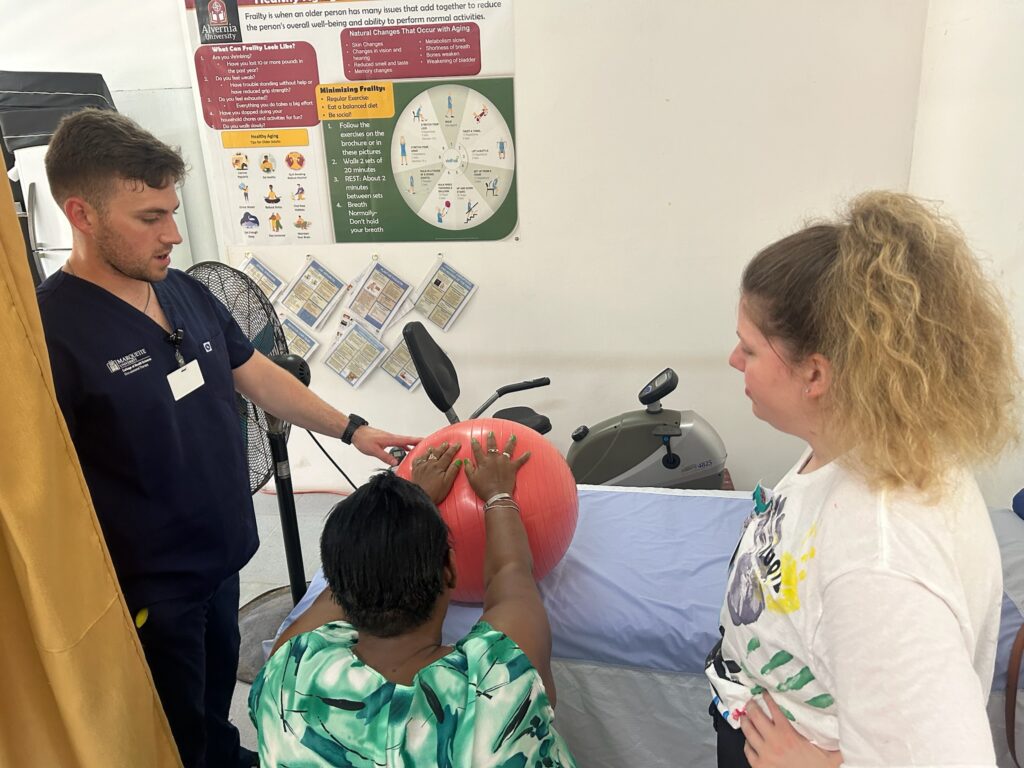
Mr. Gabriel’s story is not unique in Belize or anywhere in Central America, where occupational therapy services are sparce. That is why the College of Health Sciences’ Occupational Therapy Department partnered with Alvernia University to spend a week providing care to those with a variety of ailments, from stroke to joint pain.
The collaboration gave faculty members Dr. Ann E. Millard, Dr. Erin Campbell and Dr. Brian Zamzow the opportunity to show students how to practice cultural humility and participate in global citizenship.
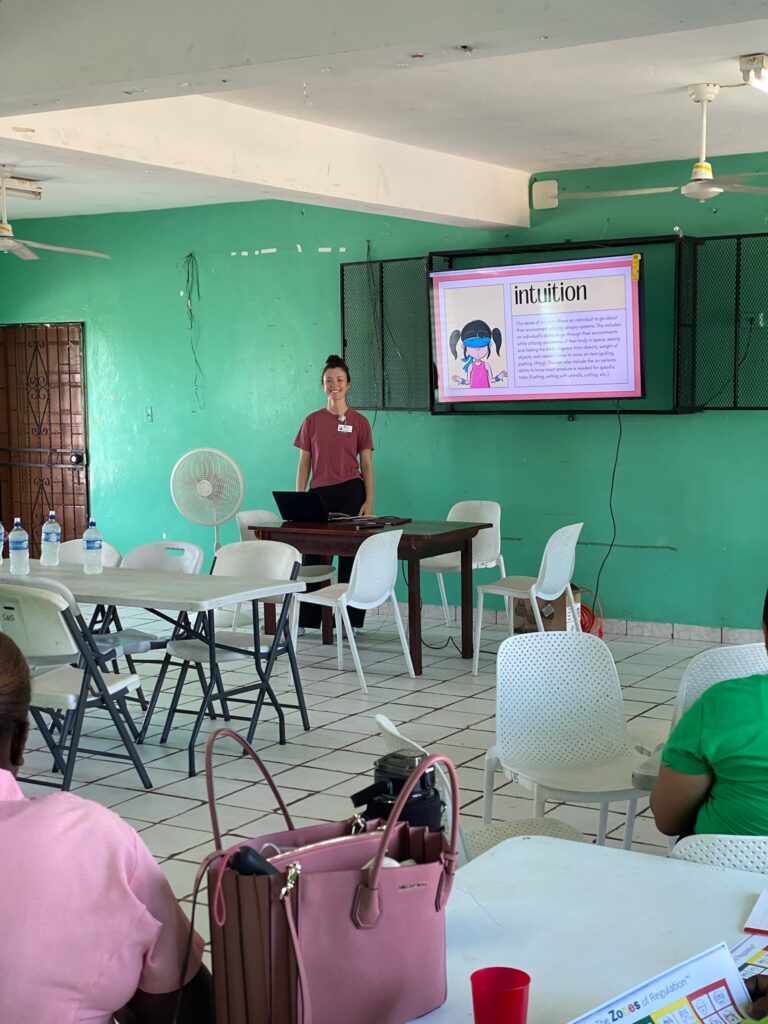
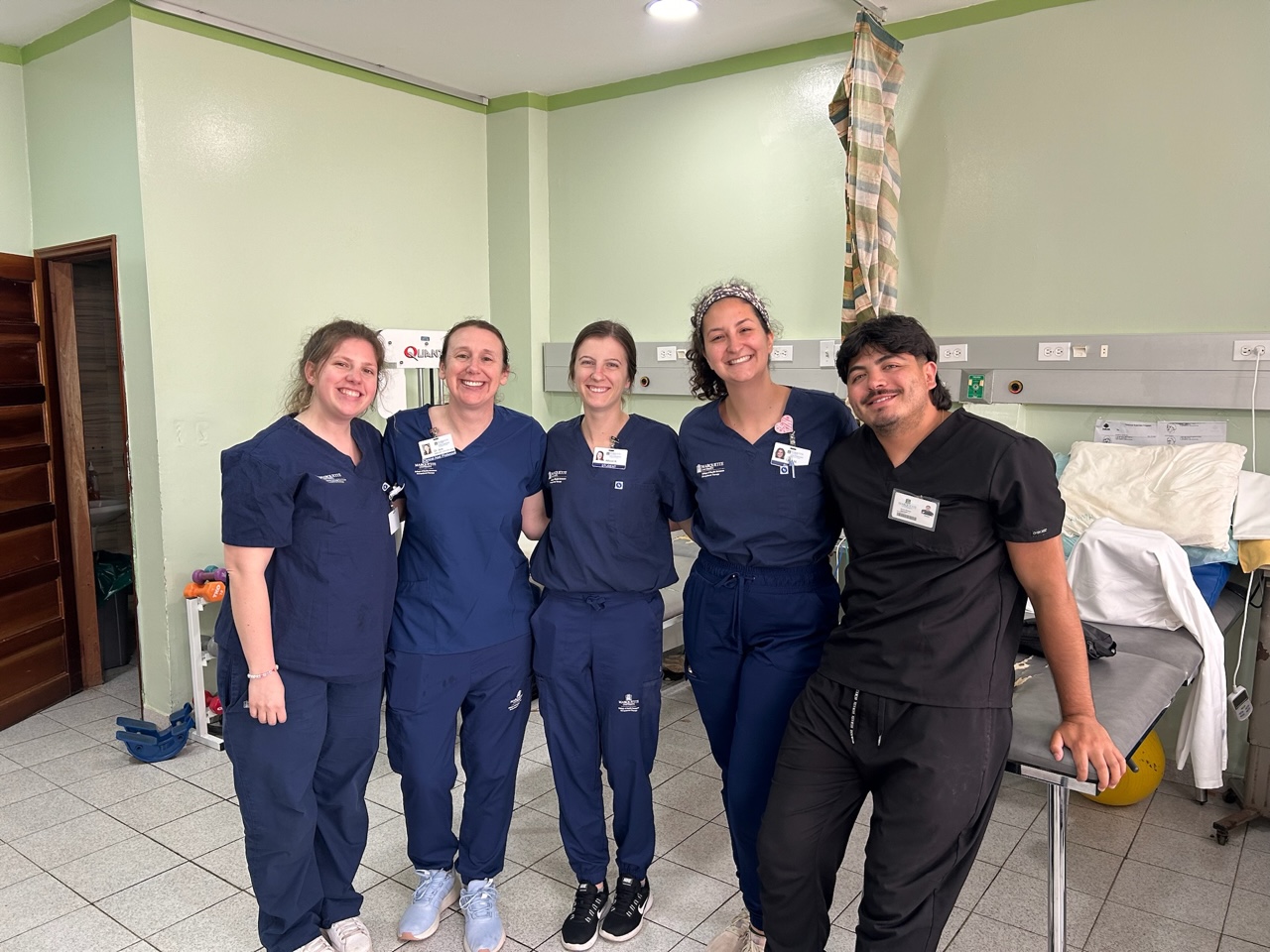
Across six sites, eight students taught their patients the habits necessary to sustain their therapy after they returned to Milwaukee.
Throughout their time in Belize, the students flexed their creative muscles and learned to administer therapy in unfamiliar contexts, says Millard, associate chair of occupational therapy.
“The students had to think on their feet and learn on the fly the whole week they were there,” Millard explains. “This trip gave them perspective that every environment they practice in will be different and not set up like an inpatient clinic. They had to be creative to administer effective, sustainable and proper therapy.”
One creative challenge for student Morghann Furr was finding and fitting a wheelchair for a child — a task that took longer than expected. Furr had to adapt the chair for the child’s sensory needs, ensure that it was properly positioned and efficient for functional transfers, and guarantee that it was safe for use.
“As occupational therapists, we focus on client-centered care, adaptability and utilizing resources that maximize a client’s abilities,” Furr says. “This was not what we had planned for the session and not what I thought I would be assisting with. However, it was what the child and his family needed and the perfect opportunity to maximize the therapeutic outcome of us being there.”
Campbell, a clinical assistant professor of occupational therapy, says students had to focus on understanding what sustainable therapy looks like for people in Belize and suggest and showcase best practices.
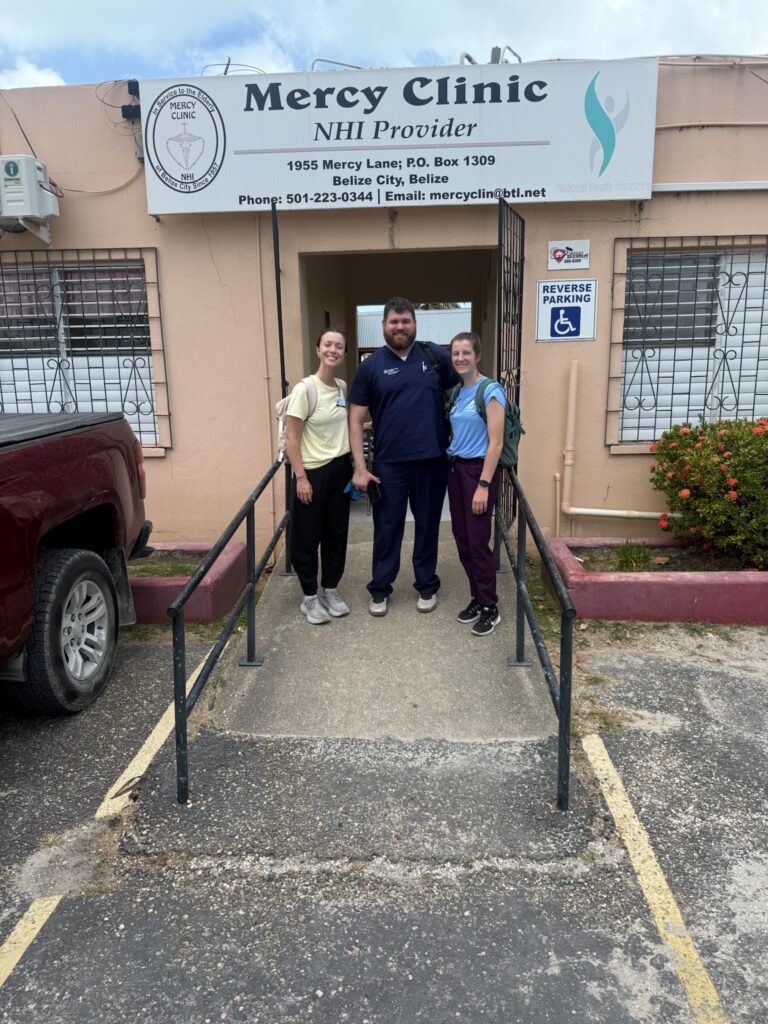
“Throughout the trip, students were immersed in a community unlike one they’ve ever practiced in,” Campbell says. “Their firsthand experience working with the people in Belize drove home the idea of cultural humanity and how they need to understand the patient’s unique situation to offer therapy that works for them and their lifestyle.”
Student Lydia Malecki valued the opportunity to treat the people in the community and was inspired by the bonds she made with her patients.
“Human connection and caring for others are essential and beautiful things no matter the differences in culture, nationality or background,” Malecki says. “Though small, these connections can make a lasting impact.”
Furr says the trip to Belize was a once-in-a-lifetime opportunity for her personal and professional growth. From educating women on the importance of pelvic floor exercises to helping people mitigate their pain and go back to work, Furr says she’ll cherish the memories she made and lessons she learned and use them to better herself as an occupational therapist.
“I learned to be OK with being uncomfortable. To share laughs, stories and experiences with others. To educate myself and others,” Furr says. “And most importantly, to remain open-minded and kind-hearted no matter what.
For Malecki, the most impactful moment of the trip stemmed from her time volunteering in the hospital treating a woman who had left-sided weakness from a stroke and wanted to work on walking.
“As we walked through the hallways, you could see the joy and excitement come over her,” Malecki says. “The patient explained she hadn’t walked that far in six months and was happy and proud of herself for having done it.
“Moments like this are an amazing reminder of why I decided to work in occupational therapy.”