When Kaila Mabus’ kidneys were inflamed to the point of failure, a dialysis machine did what they no longer would.
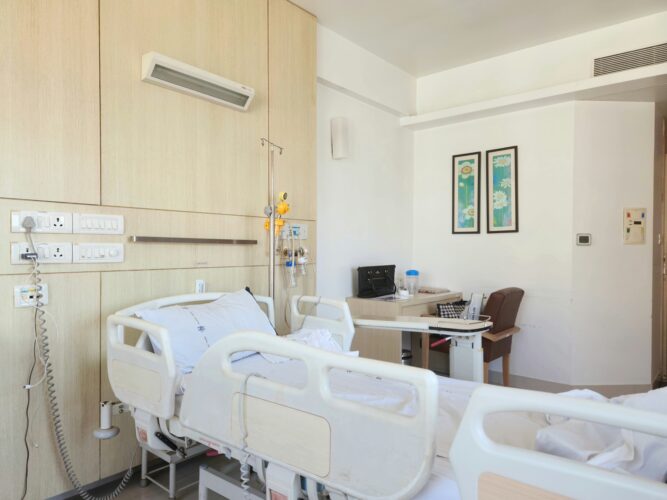
For three to four days each week, Mabus would lie in a bed at Lurie Children’s Hospital in Chicago. A dialysis catheter in her chest fed her blood to and from a machine that removed its waste. A pericardial drain carried excess fluid away from her body. This would start sometime in the morning and go on for three to five hours, during which Mabus stayed in the same position. Her parents or grandparents would sit there by her side.
“Dialysis drains you of all your energy,” Mabus says. “You’re really tired afterwards because of everything your body has gone through.”
There’s little indication of those days left. Those who look at Mabus now will see a typical rising sophomore at Marquette — a nursing student who enjoys hanging out with her friends and going to basketball games. But while the chest tubes, pericardial tubes and dialysis machines are long gone, Mabus’ brush with Castleman Disease, a rare, life-threatening lymphatic disorder, has shaped everything about the person she is today.
“I learned to go day by day and I want to do as many things as possible, because there was a time when I almost died,” Mabus says.
THE BEGINNING
In September 2019, Mabus, then 13, did not feel like herself. She was less active and slept a lot. Mabus had struggled with anxiety and depression in the past, so doctors thought that might be the source of her problems.
A blood test yielded a much different result; one that none of them were prepared to hear.
“I went home, then they called and told me to come back immediately because I was experiencing renal failure,” Mabus says. “That’s when they transported me to the children’s hospital.”
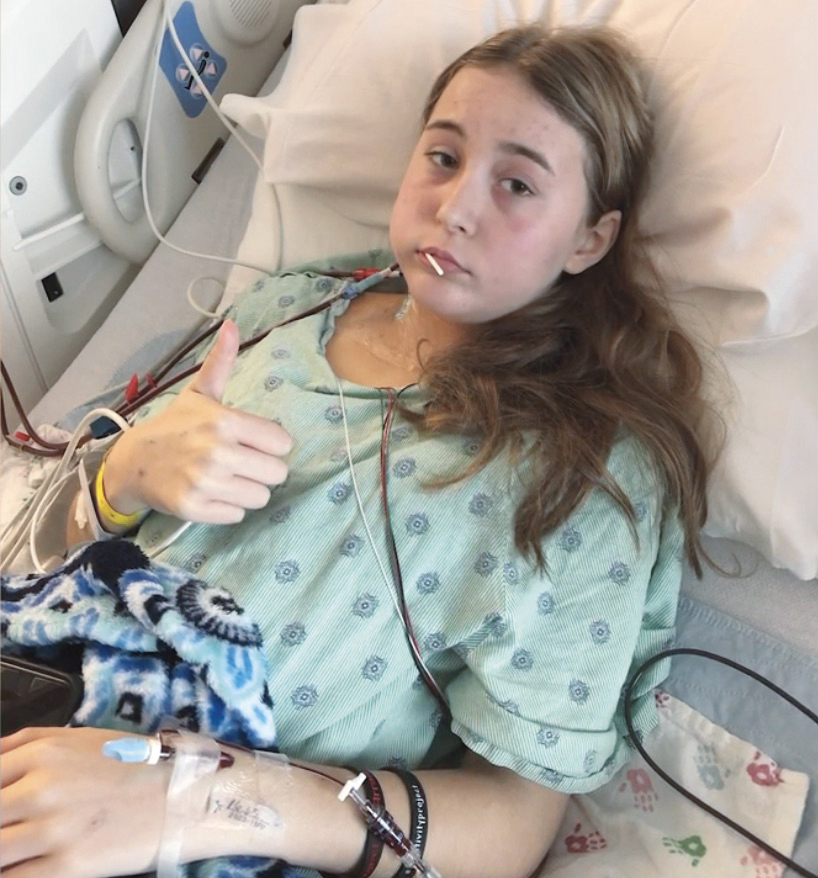
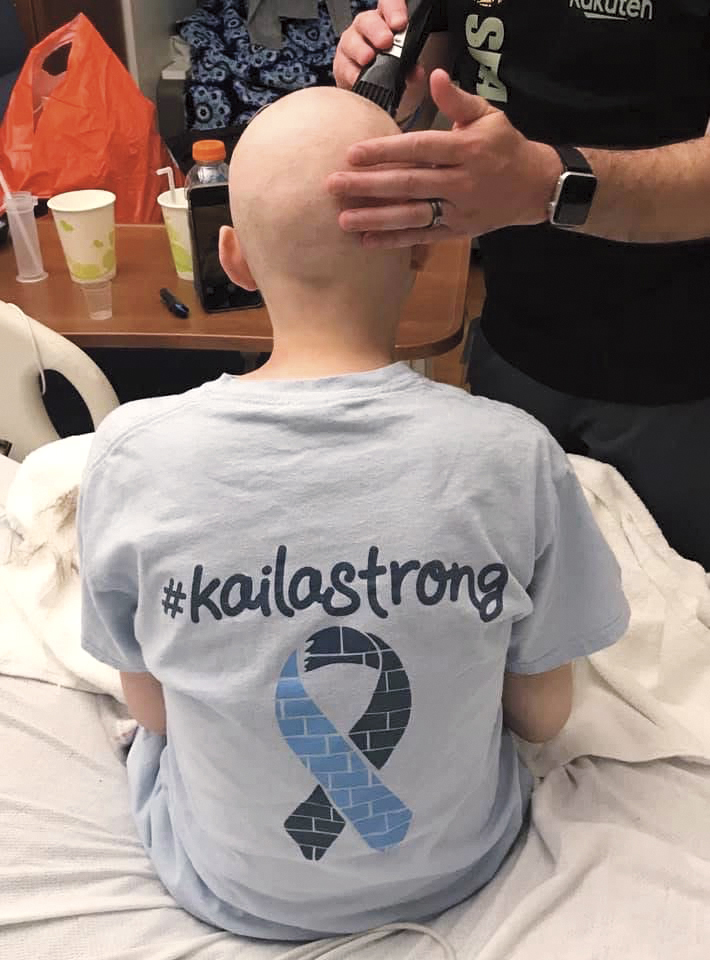
After a month of tests and treatments, Mabus became the first patient at Lurie to be diagnosed with Castleman, a disease with only 5,000 to 6,000 diagnoses per year in the United States, which has a population of 340 million. While Mabus’ friends started eighth grade, she stayed in the hospital, playing Uno and solving jigsaw puzzles with her mom on the days where she felt up to it, which got fewer and further between as the disease progressed. Her disease was the multicentric kind, impacting her heart, lungs and kidneys. Four rounds of chemotherapy and a year in the hospital did not solve the problem.
She would later learn that doctors were not optimistic about her chance of survival.
“My doctors didn’t think I was going to make it. They were ready to try anything because I was running out of options,” Mabus says.
THE TREATMENT
It was shortly after that conversation that doctors told the Mabus family about a breakthrough made in a nearby laboratory. Just weeks prior, researchers found that Jakafi, a prescription medicine used to treat blood-related conditions, had shown promise for easing Castleman symptoms.
The discovery was made with the support of the Castleman Disease Collaborative Network, which looks for ways that FDA-approved drugs can be used off-label to treat rare diseases that lack approved medicines. Dr. David Fajgenbaum, the organization’s founder, worked with Mabus’ oncologist to identify the right drug for her.
Mabus first took the drug in July 2020 and did her final round of chemotherapy a month later, joining her first-year classes remotely after the treatment was completed. Within months, she began to feel more energized. She attended remote classes more regularly, sitting through a few classes at a time and then taking a break to nap. Soon she stopped needing the naps. By January, doctors declared Mabus, who was on the brink of death six months prior, to be in remission.
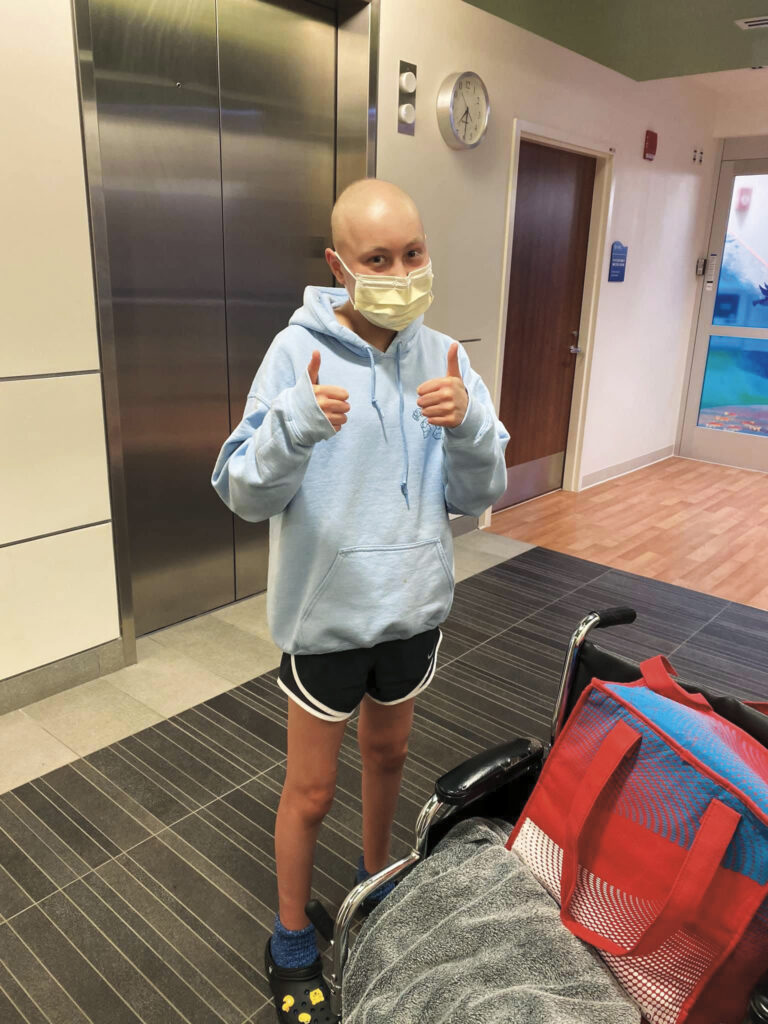
“I was getting through the day so much easier by the end of that first semester of high school,” Mabus says. “I had to regain my muscle mass, though. I was so skinny that you could slide a bracelet all the way up my arm. But I was feeling so much better.”
As she healed, Mabus poured her time into advocating for the CDCN, knowing that it could help many more people just like her.
“They’re trying to find a cure and they’re trying to help people who are overlooked.”
THE CALLING
Nursing was never a consideration for Mabus prior to Castleman; she didn’t even know anything about it. She had her heart set on becoming a teacher because she loved working with children.
That changed after spending months in Lurie, where the nurses got to know her in ways beyond just a medical chart. Mabus remembered Jessica for making her laugh, Brittany for taking her out on the patio to get a little bit of air each day and Anna for being with her on the hematology-oncology floor during Christmas. Their care showed Mabus her true calling.
“We always hear about cura personalis at Marquette: caring for the whole person. My nurses embodied that. They cared for me physically and mentally; they were true friends to me,” Mabus says.
While Mabus is not certain what specialty she wants to pursue, she is favoring the two areas she experienced as a patient: nephrology and oncology. She’d still like to work with children and hopes to show them the same compassion she received from her care team.
“My experience with Castleman Disease has made me want to become a nurse. It also made me a better person,” Mabus says. “If there’s one thing I can say to patients going through treatment, it’s to never give up. Take it one day at a time and believe in yourself because you are stronger than you know.”