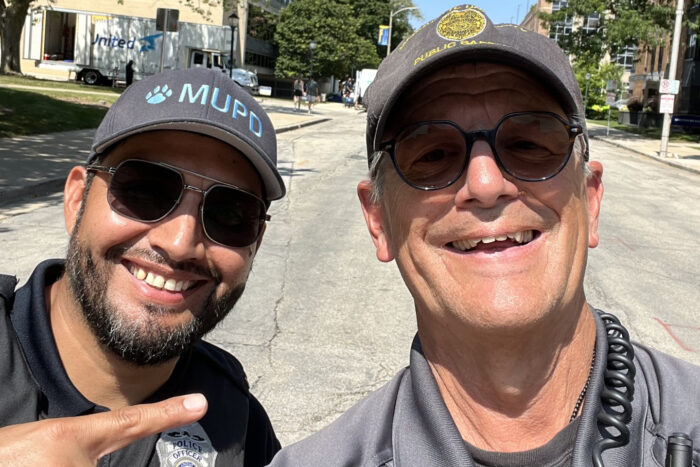
Oscar Hernandez, Eng ’25, was unfamiliar with process engineering when he landed a co-op with Astronautics Corporation of America in Oak Creek, Wisconsin, his junior year. He soon discovered he loved the fast-paced environment that had him continually on his feet, thinking fast and solving problems.
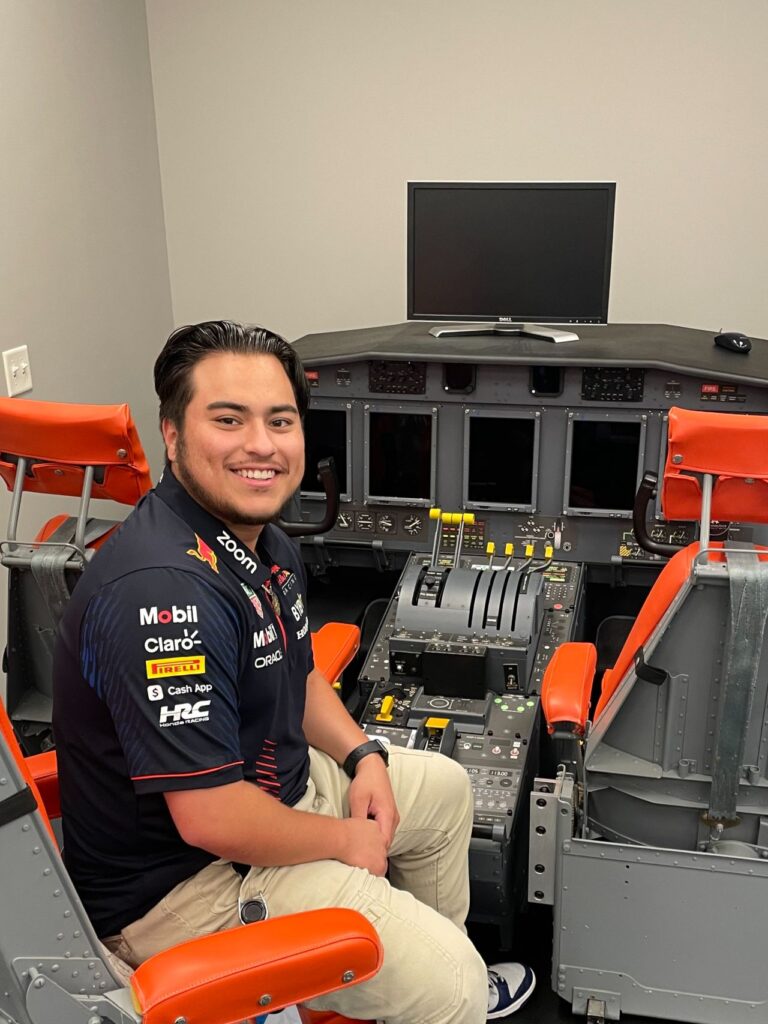
“It’s like being the firefighter on a manufacturing floor,” says Hernandez, a mechanical engineering graduate from Milwaukee who discovered a passion for the aerospace industry through his co-op. “If a machine goes down and someone needs the right tool, process engineers work as the first responders to get them what they need.”
With that realization, Hernandez fulfilled the vision of the co-op program — a program the Opus College of Engineering pioneered more than a century ago. Hernandez and other co-op students have built relationships and a presence with a company through long-term, hands-on learning experiences; progressed in their contributions, responsibilities and leadership; and they have often seen a major project cycle to completion.
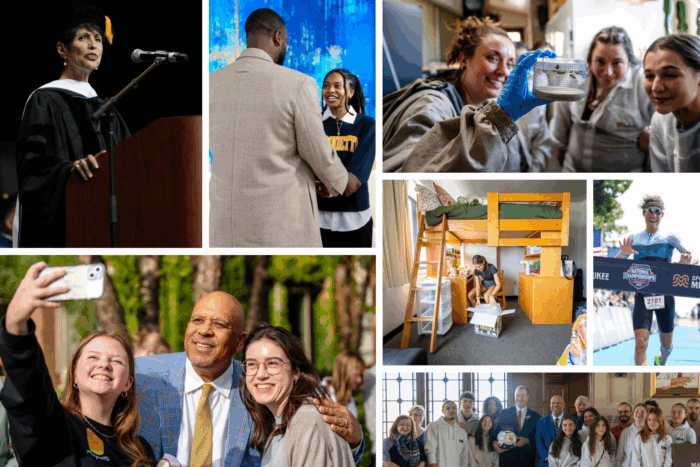
Co-ops are a degree requirement for all construction engineering majors and are a highly sought-after optional experience for the Opus College’s eight other majors. While nearly all Marquette engineering students gain some type of high-impact experience before graduation, whether through co-ops, internships or research, co-ops remain the gold standard for students and employers.
“Our industry partners often say Marquette co-op students have a curiosity and eagerness to learn and contribute,” says Opus Dean Kristina Ropella. “Our students are seen as risk-takers willing to get their ‘hands dirty,’ try new things, think differently and challenge the status quo.”
Finding the right fit
Kennedy Coplen, Eng ’20, serves as the Opus College’s associate director of industry relations, bringing her own industry experience as well as co-op experience within the biomedical engineering field during her undergraduate years. When she talks with industry partners — many of whom come back year after year to recruit Marquette students — Coplen said that most have longer-term goals in mind.
“Most of our industry partners are interested in hiring co-ops that could develop into full-time employees, and Marquette hosts numerous campus events for engineering professionals to meet our students,” says Coplen. “Our industry partners invest in the co-op students they hire by providing students with opportunities to build skillsets valuable to the company and in general as an engineer. All the while, the employers are asking, ‘Can we picture this person at the company five years from now?’”
“Internships might only scratch the surface of what students can learn or discover. You’re not going to get nearly the understanding of the field you’d get through a co-op.”
Jake Stefan, Eng ’99, President of ARCO DB Companies
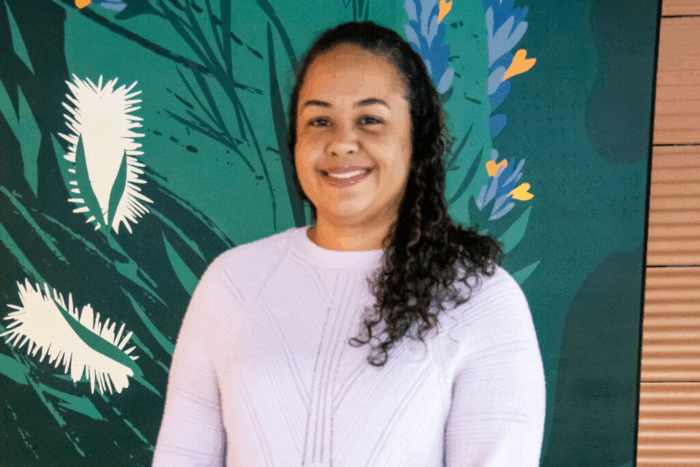
That’s what co-op partner Gretchen Borden, Eng ’03, Grad ’07, looks for when she visits career fairs with Harley-Davidson. She completed her co-op there, secured a job offer and never left. In 2022, she was named a chief engineer.
“When you say the term engineering, it’s so broad,” Borden says. “Co-ops can help you figure out what you like and, more importantly, what you don’t like. You’re learning transferable skills, and no matter what, you can apply what you’ve learned to every area where you work.”
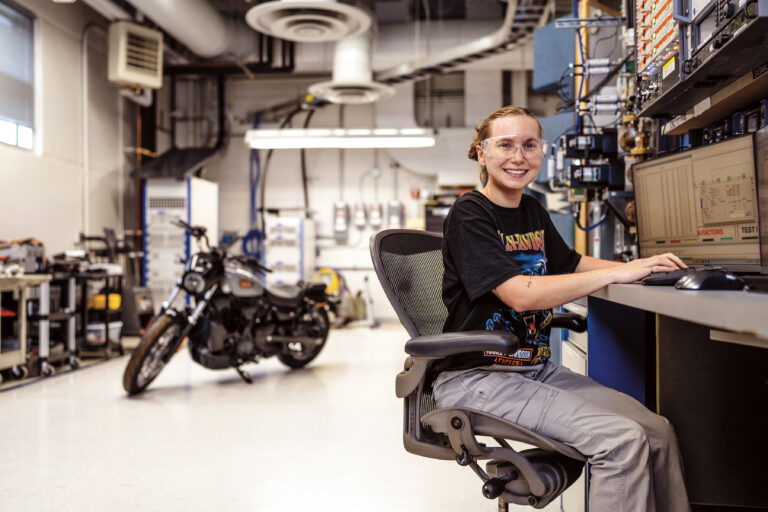
During one career fair, Borden placed a star on one resume that stood out, even among the many talented students she encountered. It belonged to Anna LoFaro, an electrical engineering major from St. Peter, Minnesota, who ultimately chose Harley-Davidson among multiple offers. LoFaro grew up with a grandfather who loved fixing and riding motorcycles, and Harley-Davidson felt like a perfect fit.
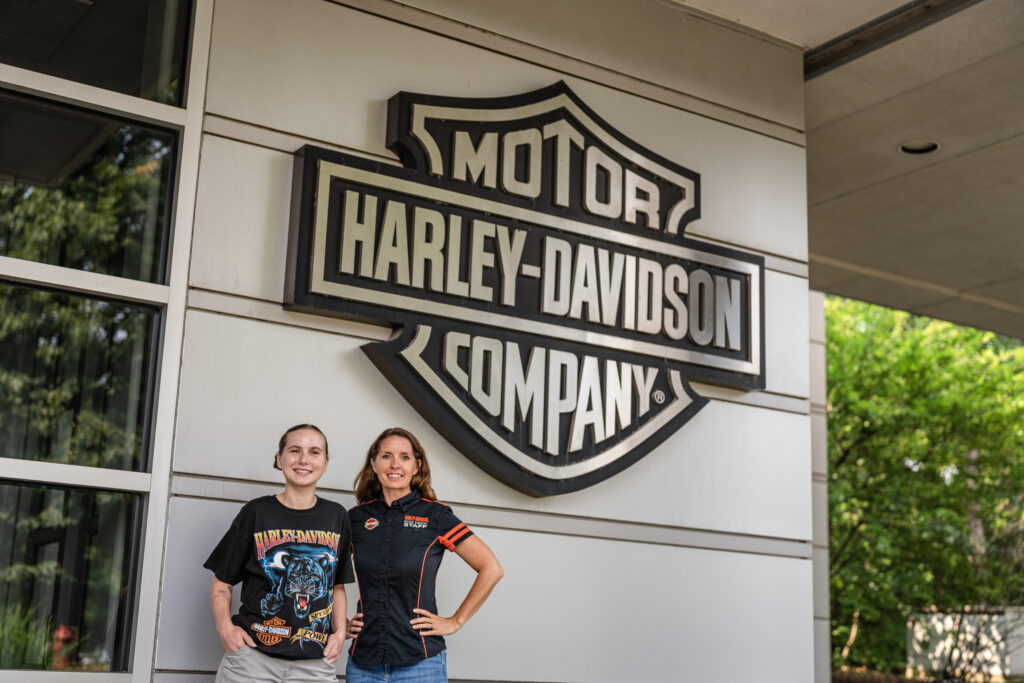
Even with her knowledge of motorcycles, however, LoFaro says she didn’t love the work she was given in her first semester despite being on a great team. In her second semester, she was able to do a project with the LiveWire Group, an electric motorcycle sister company, and had experiences that solidified her desire to work in the electric vehicle industry.
“I was able to settle into a role that really resonated with me,” LoFaro said. “At Harley-Davidson, they treat co-ops like a three-year interview. I tell other students that through co-ops, you gain more in-depth opportunities and knowledge throughout the process.”
Paying it forward
Now president of ARCO DB Companies or ADB, Jake Stefan, Eng ’99, loves to hear Marquette students’ co-op stories, many of which echo his own. A civil engineering major, Stefan said his co-op at The Opus Group in his hometown of Chicago helped him discover his future was in construction. Although he received full-time job offers from Opus, they weren’t in Chicago, which led Stefan to start considering working anywhere in the U.S. that was the right fit. In fact, an Opus leader recommended him for a position at ADB, at the time, a small firm started in Atlanta in 1995.
Stefan started in the Atlanta office in summer 1999, and today he’s leading ADB. He says he owes his career trajectory to his co-op experience, so he launched a co-op program at ADB in 2005 that has hosted more than 20 Marquette students, along with students from many other colleges. Wanting to do even more for his alma mater, Stefan and his wife, Stephanie, Eng ’98, recently established a $2 million gift to endow the industry relations office and director position Coplen now holds.
“Internships might only scratch the surface of what students can learn or discover,” Stefan says. “You’re not going to get nearly the understanding of the field you’d get through a co-op. Don’t get me wrong — I always encourage someone to get real-world experience, but to me, that’s the big difference.”
Hernandez, the 2025 graduate pursuing an aerospace process engineering career, is in the unique position of being able to speak on internship experiences as well. He used his co-op experience to land an internship at Boeing, which then hired him for a full-time two-year rotation program he started in July in Charleston, South Carolina.
He, too, has become a co-op champion.
“Students might get tired of just doing course work by the end of their sophomore year, but you never know if a co-op might be the break you needed,” Hernandez says. “Being able to step into the real world and see how what you learn through books translates to real life made that extra time worth it.”