Photo courtesy of Noelle Haro-Gomez, University of Arizona Health Sciences Office of Communications
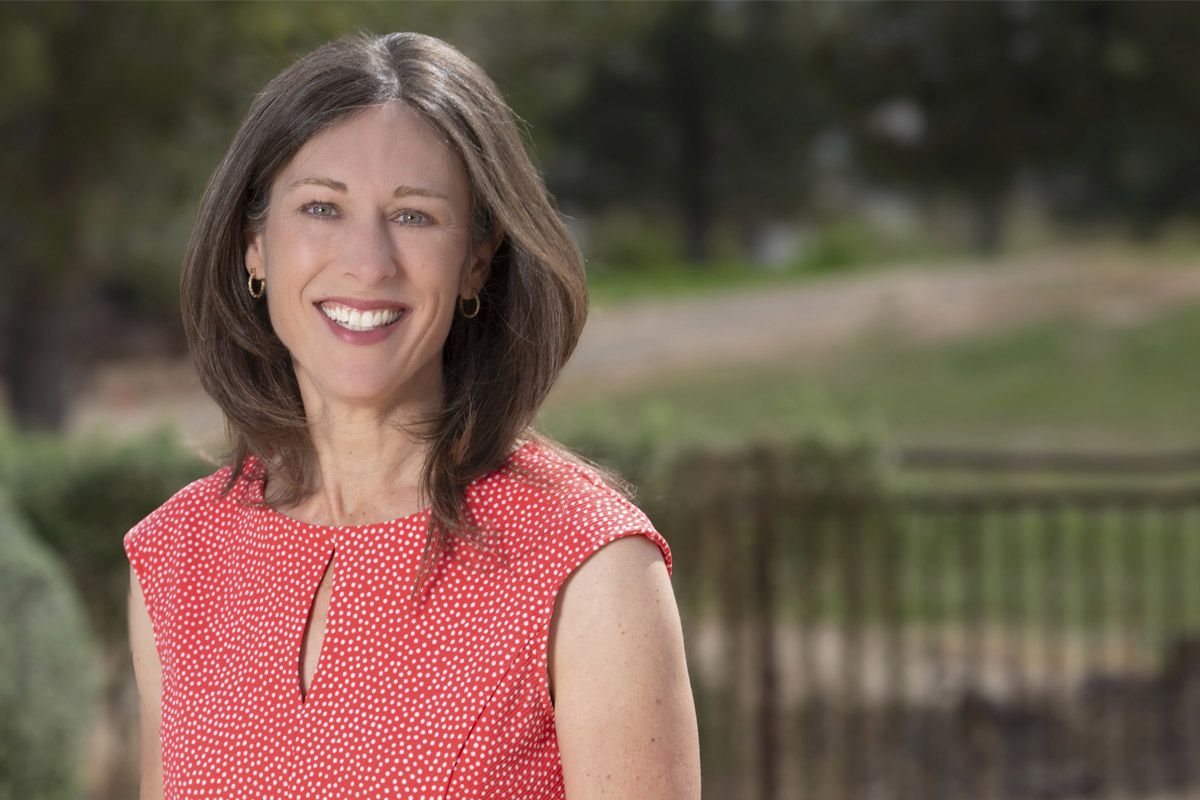
Dr. Sheri Carson-Beauto, Nurs ’97, Grad ’03, a pediatric nurse practitioner, has worked in pediatrics for nearly 30 years and provided care to thousands of children. Yet there’s one child, a 2-year-old boy, she will never forget.
He arrived in her pediatric care unit in a Milwaukee hospital just a few months after Carson-Beauto became a registered nurse. He’d been held in scalding water by his mother’s boyfriend, suffering severe burns. Each day she watched him suffer painful dressing changes. His only comfort came from the Barney the dinosaur show she played for him.
“I still can’t watch or listen to Barney,” Carson-Beauto says, tears in her voice. “I felt so helpless and angry. I will never be able to understand how anyone can hurt a child.”
Years later, as a doctoral student at Arizona State University, she turned the haunting memory into action, developing one of America’s first standardized screening processes to assess a child’s risk for physical abuse.
“In the U.S. there are protocols for evaluation and management once abuse is already present, but no early identification measures,” she explains. “I wanted to change that.”
The ESCAPE tool
The medical director of the Southern Arizona Children’s Advocacy Center introduced her to the ESCAPE screening tool from the Netherlands, which uses a survey to evaluate every child visiting the emergency room for abuse potential. Inspired, Carson-Beauto researched further and found three barriers to adopting a similar model in the U.S.: lack of validated screening tools, lack of provider knowledge and lack of time in the ER. To address this, she adapted ESCAPE into a standardized protocol that could be used for every child during intake.
Carson-Beauto emphasizes the ESCAPE tool does not “diagnose” abuse. Instead, it identifies risks, such as delayed care for injuries. If risk factors exist, it triggers further examinations. “We don’t want to wait until there is already a bruise or a burn or a fracture to start protecting children,”she says.
A key part of implementing the screening was provider education. While Carson-Beauto piloted the program in a pediatric emergency department, in ERs less familiar with pediatric care, staff often lack training to spot warning signs, like a parent claiming a 5-week-old rolled off a bed — something developmentally impossible. Providers also worry about mistakenly flagging families for abuse. Carson-Beauto explains: The tool isn’t an accusation, but an alert. One flag for abuse potential triggers additional examinations to reveal the true potential, she says.
She began rolling out the screening program in 2017 in Arizona as a part of her doctoral program. She led training sessions, created cards with guidelines and educated health care staff.
Then COVID hit.
“The pandemic sapped resources and everyone was on the front lines,” she admits. “We didn’t have time to implement new screening processes when we were drowning.”
Progress toward a formalized screening program stalled, yet she persisted, driven by the belief that the most powerful thing a nurse can do is protect the vulnerable, especially children. By late 2020, she was delivering educational sessions about the screening protocol and ESCAPE tool to medical professionals in six states.
A calling shaped early
Carson-Beauto first discovered that persistence when she was a teenager visiting her great-grandmother in a nursing home. Watching the care provided there helped her see that her love of science and compassion made nursing a calling, not a job. Later, through her work in the Jesuit Volunteer Corps at a domestic violence shelter, she was introduced to how health care can support vulnerable populations.
Though she didn’t realize it at the time, that experience helped shape “my understanding of how abuse is a health issue,” she reflects.
Today, those early lessons — compassion, communication and prevention — guide her mission. For her work, she has received the College of Nursing Professional Achievement Award in Marquette’s 2025 Alumni National Awards and was recognized as part of Johnson & Johnson’s “Nurses Leading Innovation.”
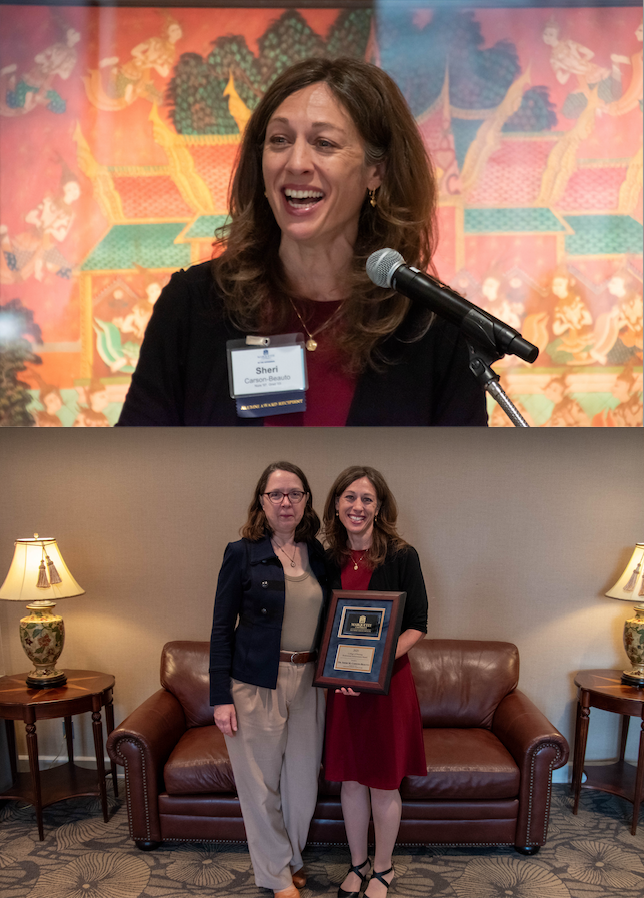
As an assistant clinical professor at the University of Arizona, she hopes to offer a class on how to implement an abuse protocol screening in a health care setting. The more professionals trained in this work, Carson-Beauto says, the easier it is to screen more children. “I want to see a health policy that mandates screening every child for abuse at every visit, not just in the ER,” she says.
As she works to expand the process, she relies on her Marquette education. “Marquette bolstered my confidence,” she explains. “It gave me a foundation for my values, and it gave me hope.”
In everything she does, the memory of the 2-year-old boy and the “Barney & Friends” show stays close. It’s a reminder of why she will always fight to protect the most vulnerable.