Dr. Tim Tharp, associate professor of physics at Marquette University, has been studying plasma physics for over 20 years. His work, which has been recently funded by a three-year National Science Foundation exploratory grant, involves applying his background in plasma physics to study antimatter in Switzerland, while helping the younger generation gain interest and understand the importance of advancing the field.
But what exactly is plasma physics?
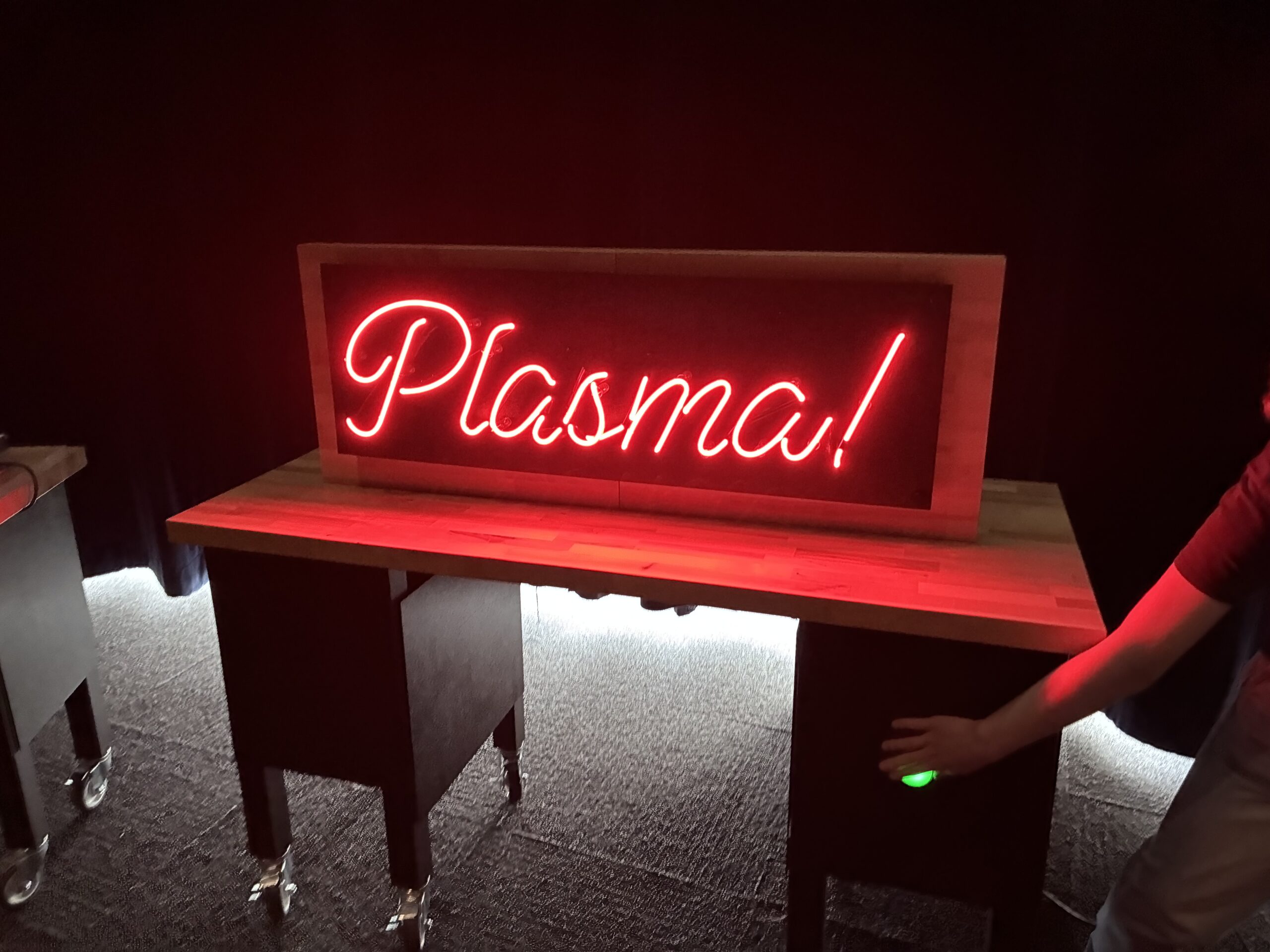
“Plasma physics is the study of things that are so hot that the electrons come off of their atoms,” Tharp says. “And plasmas are everywhere: neon lights, the Aurora Borealis, lightning bolts, plasma TVs and even the sun are all examples of plasmas. Plasma science has dramatically changed our daily lives through technologies that manufacture computer chips, dispose of hazardous waste and enable new medical procedures. Researchers are also looking to use plasmas to create a miniature sun on Earth to produce energy through fusion, creating a safe, reliable and pollution-free source of energy.”
Tharp is part of an experimental group called ALPHA that studies antimatter. “Antimatter can be thought of as the opposite of matter: it has the opposite electrical charge, and whenever antimatter and matter come together, they annihilate!”
Although antimatter is thought to be an exact “reflection” of matter, there is one obvious difference — almost none of it exists in our universe. Researchers are trying to understand why our universe is made primarily of matter instead of antimatter. One way to understand this better is to experimentally compare the two types of material to look for any fundamental differences.
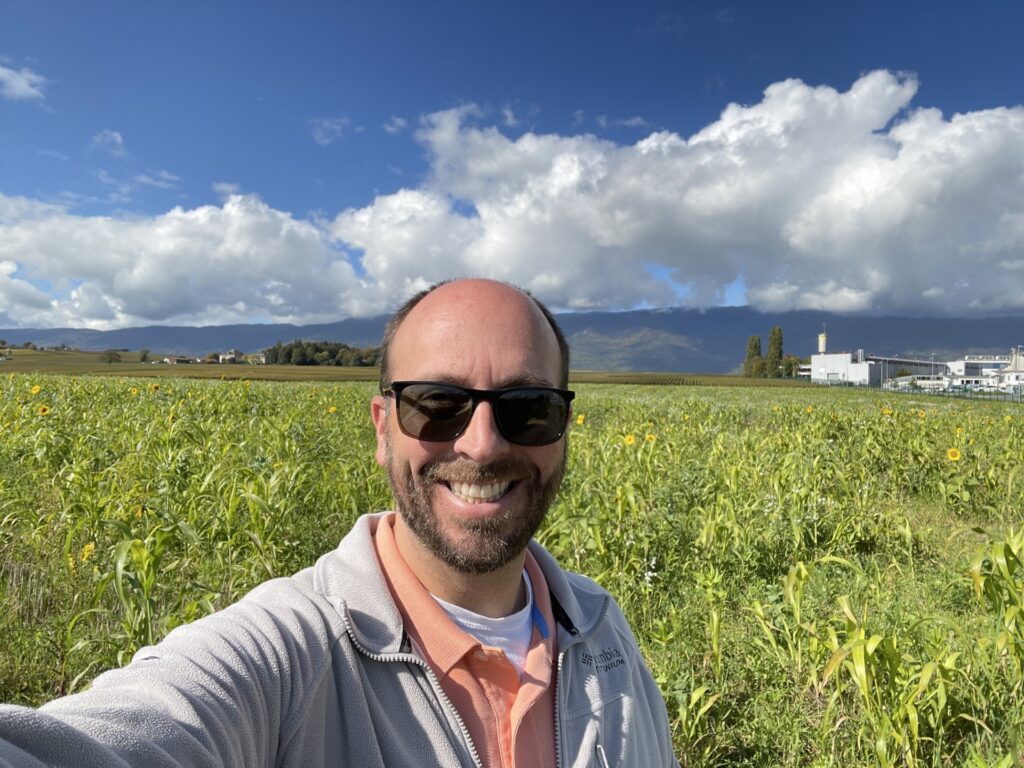
“We can create antimatter in the lab at CERN, the European Organization for Nuclear Research, in Geneva, Switzerland,” Tharp explains. “Once we create it, we can study its properties to see if matter and antimatter really are exact reflections of one another, or if there are unexpected differences.”
The NSF grant that funds Tharp’s research focuses on understanding how trapped particle clouds, known as non-neutral plasmas, behave. In the lab, he uses a special particle trap called a Penning-Malmberg trap to hold on to charged particles — which could be matter or antimatter.
“This interdisciplinary work has the potential to contribute to a better understanding of the specific way in which we make antimatter at ALPHA but also has the potential to improve our understanding of plasmas in general,” Tharp explains.
Tharp’s program aims to share these exciting sciences with students. “The skills and knowledge our undergraduate students gain through working on projects like this really make a difference by helping them succeed in graduate school and industry.”
Discovering a new world
Another way Tharp and his students are spreading the word about plasma physics is by creating and displaying educational exhibits at Milwaukee’s Discovery World museum.
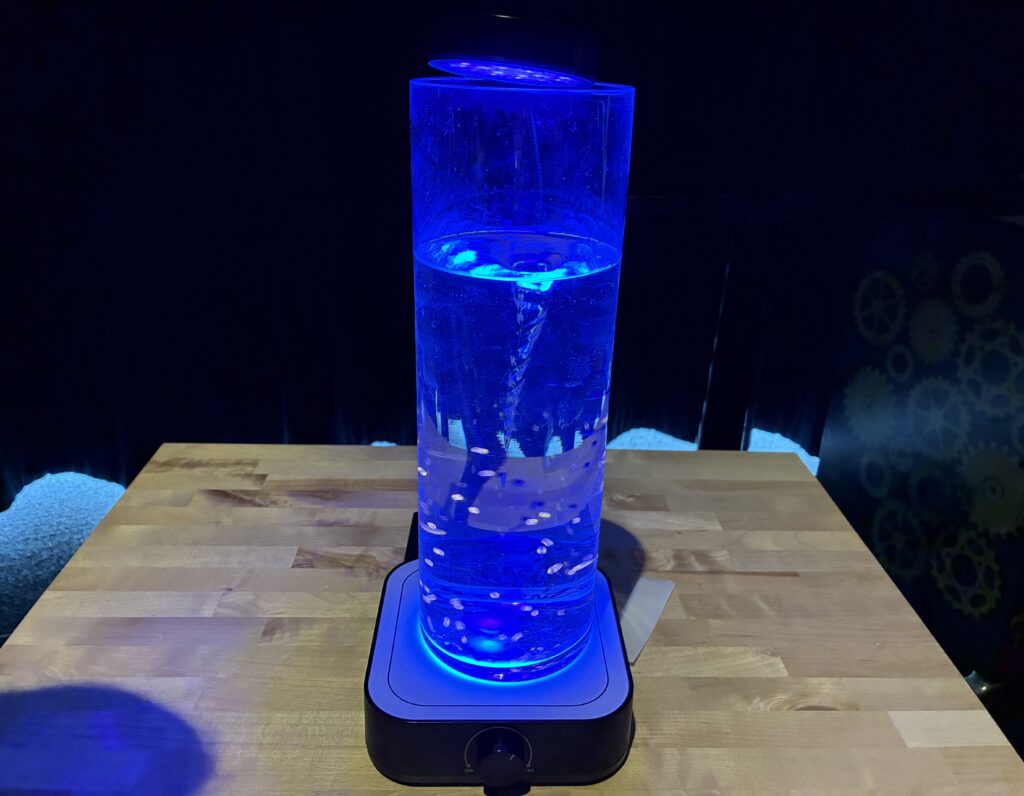
Sophomore Eleanor Bennett is helping to build museum exhibits that focus on four states of matter and will help acquaint families across Wisconsin with the world of plasma physics.
“In our exhibit, we build upon the standard lesson of solid, liquid and gas to introduce plasma as the fourth state of matter,” the mechanical engineering major says. “We introduce concepts such as adding energy to change states and the idea of ionization, ultimately giving visitors the opportunity to interact with plasmas directly. We also showcase how plasma is found in lightning, neon signs and even forms the Northern Lights.”
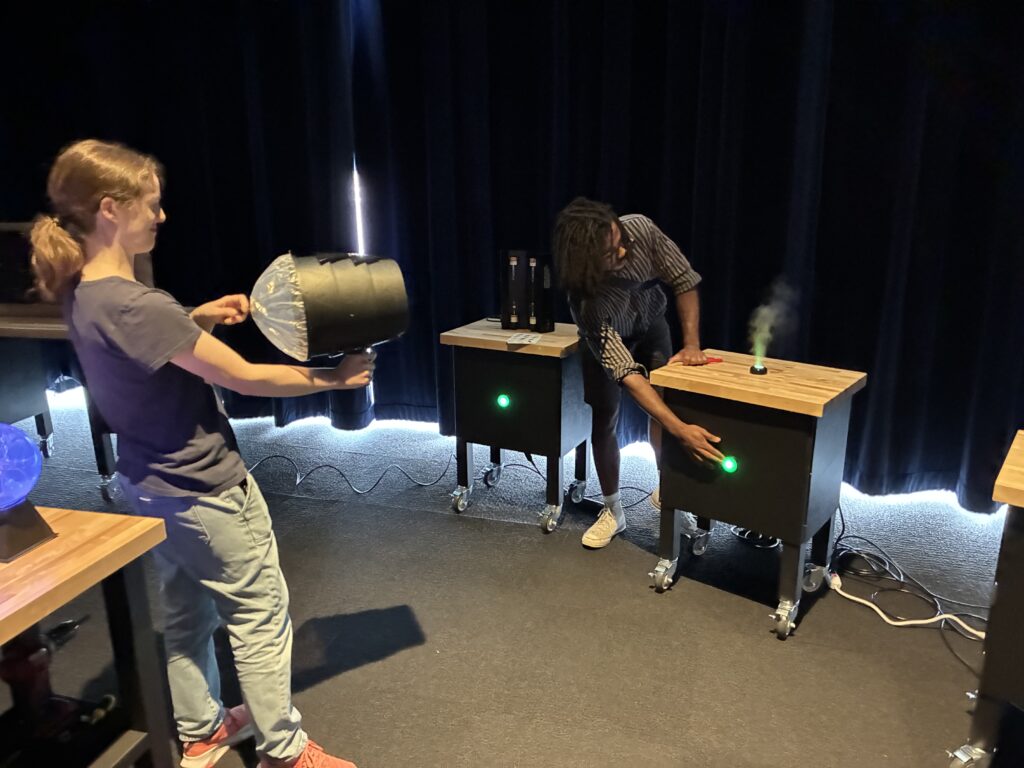
Senior physics major Hunter Ott is also assisting with the plasma-focused display at Discovery World. He is one of the young minds who felt the spark to study plasma physics after taking an astronomy and space physics class.
“What deepened my interest even more was learning about the groundbreaking research being done in the department,” Ott says. “It’s really cool that physics professors in our department are contributing to some of the most significant research efforts in physics.”
As for the Discovery World exhibit, the goal is to have it open to guests by the end of summer.
“I hope that this inspires people to be excited about science in a new way,” Tharp explains. “And maybe we’ll help convince some kids to go into science instead of some other career, but ultimately, I think it’s about the message that science benefits society and helps us understand our world.”