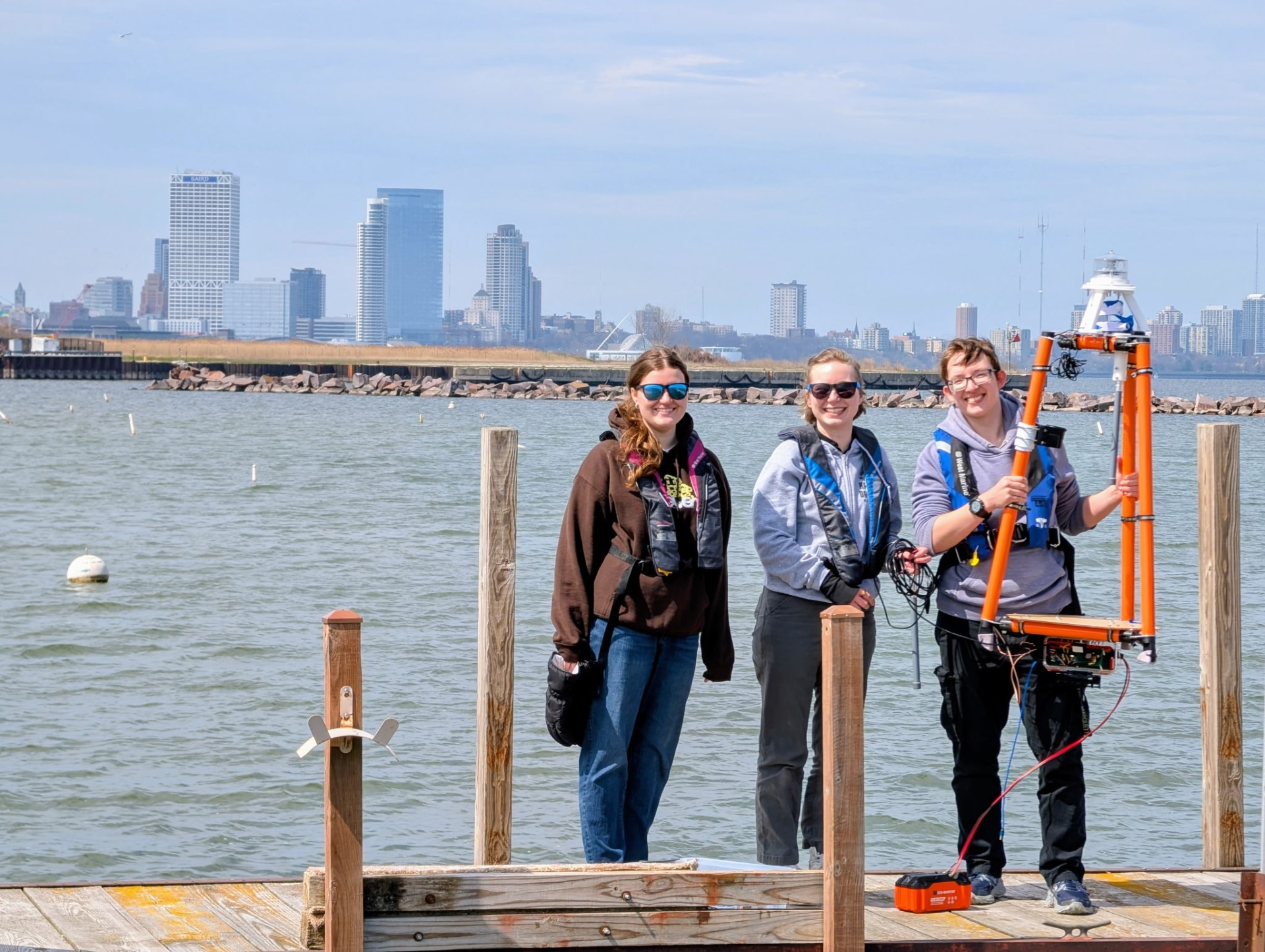
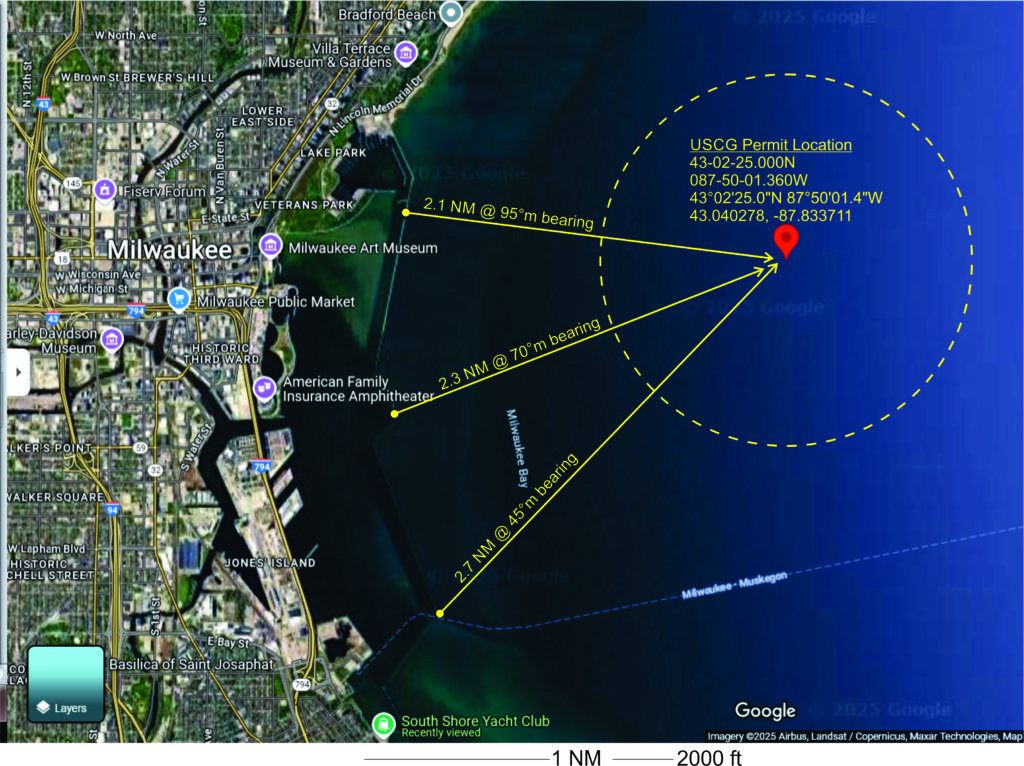
Two miles off the shore of Lake Michigan bobs a weather buoy unlike any other in the Great Lakes. The recalibrated bright orange device that provides the Milwaukee community with up-to-the-minute weather conditions on the lake has been revamped twice by an ambitious group of engineering students for their senior design project.
“The two projects this year revamped the buoy structure and its electronics, building off last year’s senior design assignment,” says Dr. Tony Bowman, research assistant professor of mechanical engineering and faculty adviser.
The buoy collects offshore data including temperature, relative humidity, barometric pressure, wave heights and also calculates the water current, providing critical data for the Milwaukee sailing community, anglers, swimmers, surfers or anyone accessing the lake.
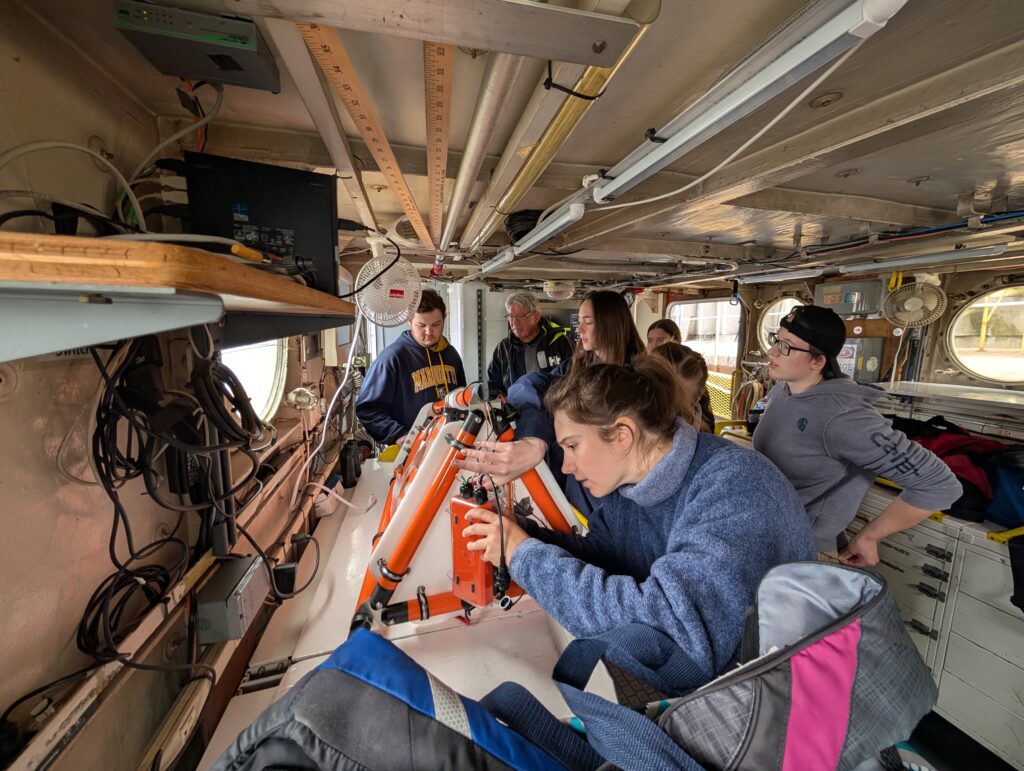
The beacon overhaul included rebuilding the original stainless-steel metal structure, which was donated by Tankcraft Corporation, an alumni owned company, with a lightweight carbon fiber provided by Forespar, which manufactures marine and sailing hardware and products. The electronics were also improved which help collect and communicate weather data to the Milwaukee Community Sailing Center, as well as the Automated Identification System, a maritime navigation safety technology.
The goal was more than just to have a completed project that functions properly but also to have the two teams successfully work together while focusing on separate elements of the structure.
Senior Anna LoFaro was on the team that oversaw improving the buoy’s communication technology.
“I handled the electrical systems, mainly power management,” the electrical engineering major says. “It was interesting because we had a lot of mechanical engineers, but it turned out to be more of a computer and electrical project. I was helping with power management, but we had solar panels and a battery. I kept thinking, ‘How do we connect this? How do we make sure that it’s powering on our devices?’”
LoFaro and four other engineering students implemented a pair of LoRa boards, used for long range communication. Bowman explains that this board is the heart of data collection and transmission.
“It’s got a small antenna, but when you put a larger antenna on it, the device can communicate as far as five miles out,” Bowman says. “There’s also a little computer on the board that uses Wi-Fi. Future versions could transmit pictures.”
The communication and the mechanical teams met biweekly to share each other’s progress and make sure everyone was on the same page.
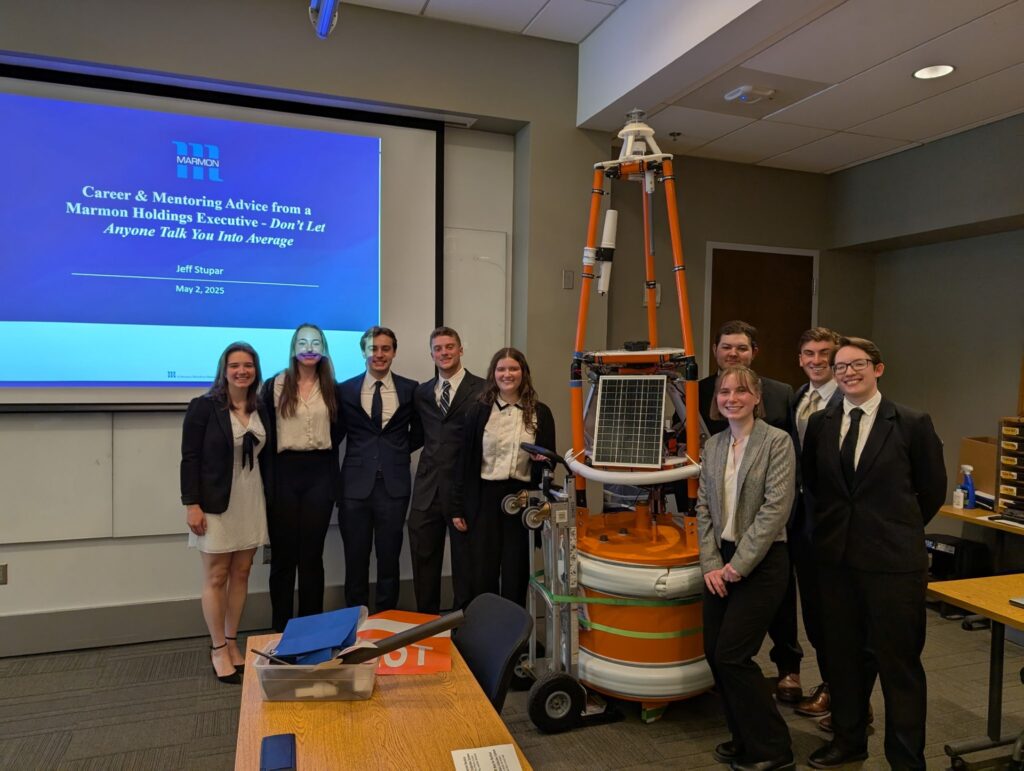
Alumnus Jack Rovin, Eng ’25, worked on the mechanical side of the project along with three students, which included upgrading the structure’s materials. He was the manager and design lead for his team.
“At the start of the semester, I had doubts that we would be able to complete the actual project — building it and deploying it on time,” Rovin says. “So, having it all come together was exciting. The biggest challenge at the start was making sure that everyone was on the same page, but I think we got a handle on it at the end.”
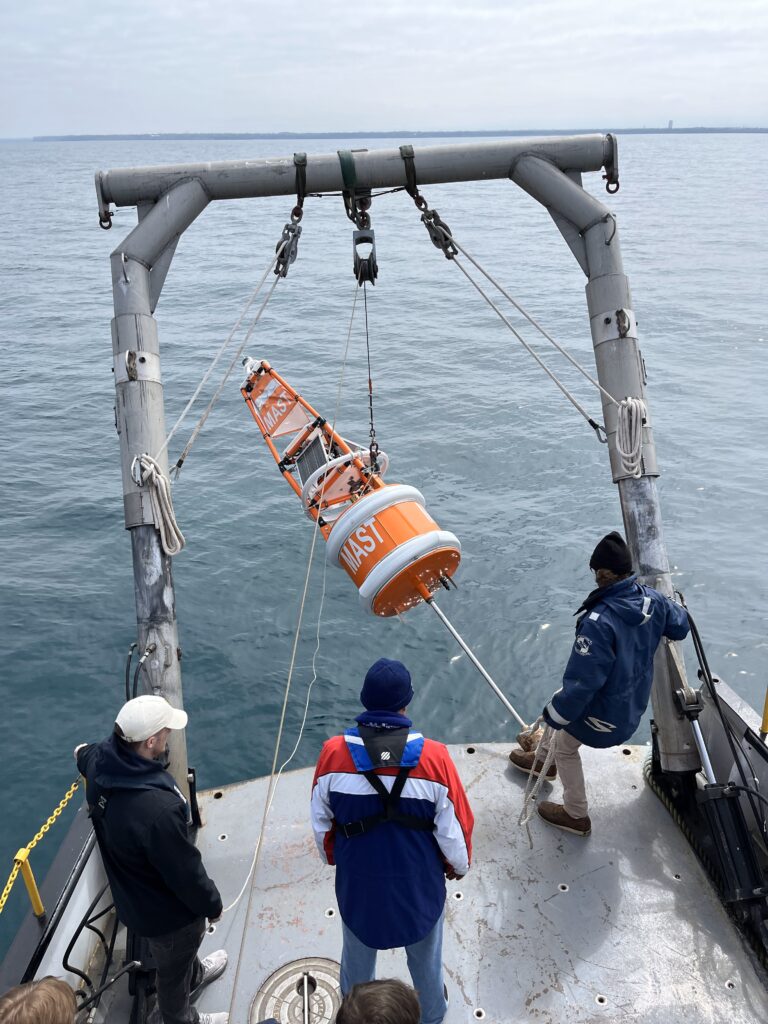
On May 5, the weather buoy was successfully deployed by the team into Lake Michigan in calm weather conditions.
Local sailors like Mark Zastrow with the Milwaukee Community Sailing Center remember the first time the buoy was placed into the lake last year.
“It was a big upgrade for us because, in principle, we can now see at the start what the conditions are down at the Milwaukee Area Sails and Trails mark,” Zastrow says. “The Milwaukee Bay has such a unique microclimate. Having that data from the other side of the course can clue us into wind shifts that we can exploit to our advantage in a race.”
Looking back, Bowman says he’s “beaming with pride” for his students and their accomplishments.
“This year’s groups were exceptional,” Bowman says. “They started the year as individuals and finished the year celebrating their successful projects as groups. They were pushed hard, had to grow as individuals, and had to refine and add engineering tools to their skill sets.”