
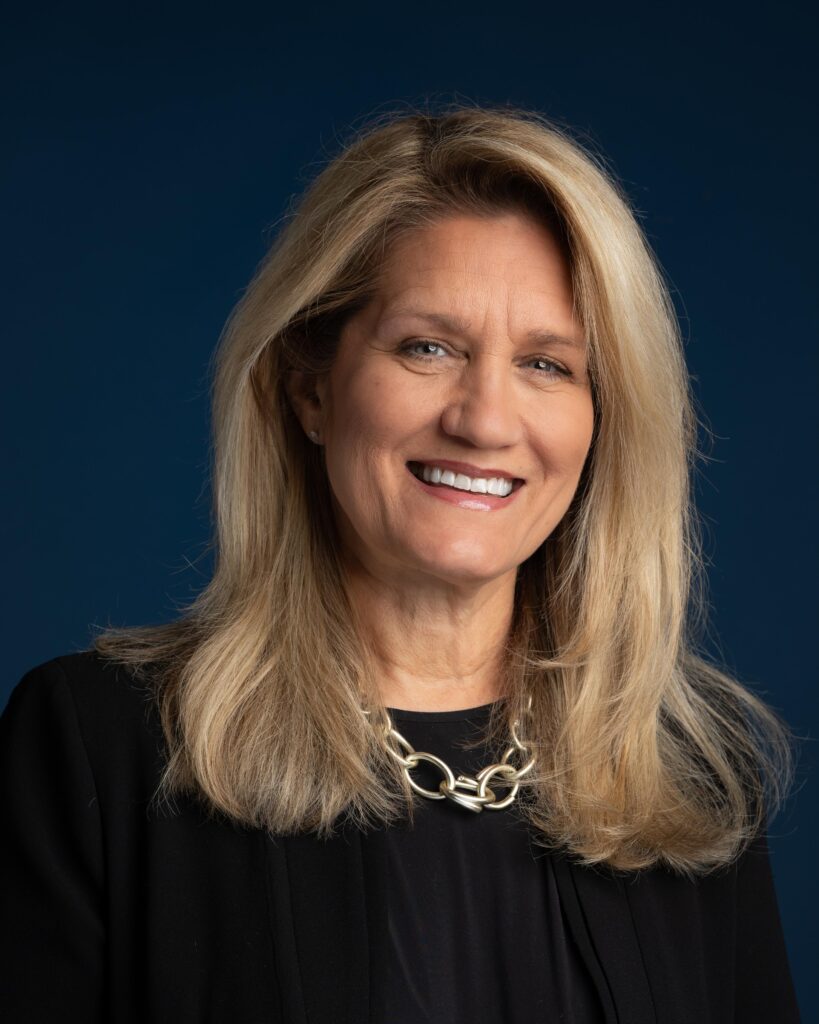
When Laurie Panella looks at Marquette, she sees a city within a city. When factoring in students, faculty, staff and contractors, the university is almost 15,000 people: larger than some Milwaukee suburbs. Contained in those thousands of people are diverse technological needs: everything from Microsoft Office to learning delivery software to tuition payment processing.
“I oversaw the technology for more than 40 diverse lines of business when I was the CIO for Milwaukee County — everything from A to Z, an airport to a zoo,” says Panella, Marquette’s chief information officer. “A university is just like that. There are so many unique areas of expertise that have specific needs: technology needs, service needs and different levels of maturity on how to use the technology.”
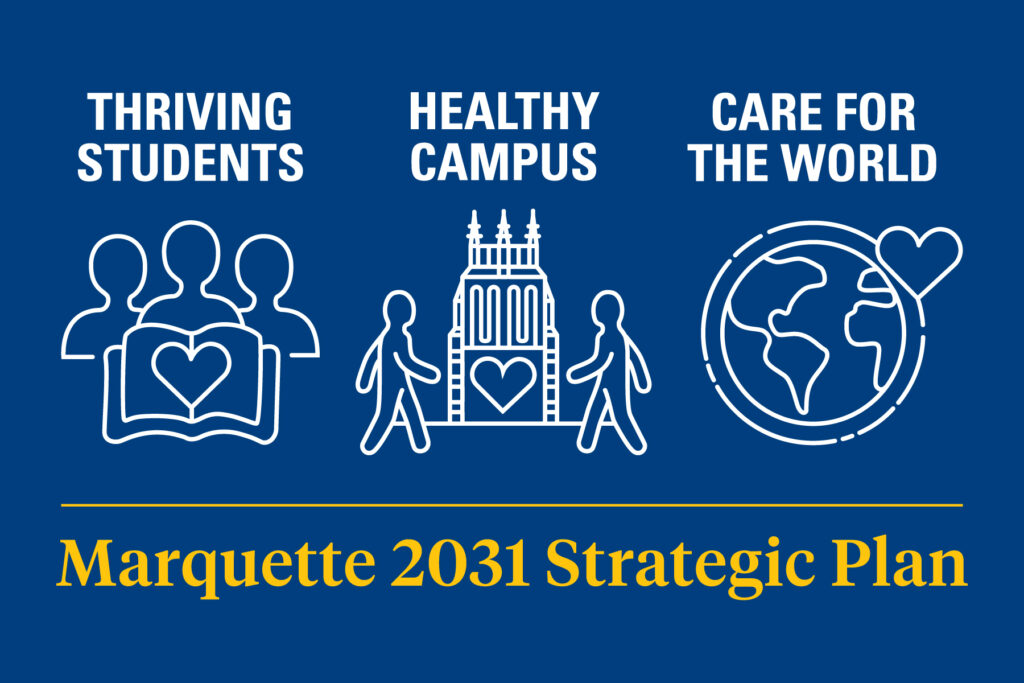
Care for Marquette’s technological environment is a core aspect of Guided By Mission: Inspired to Change, Marquette’s 2031 strategic plan. The plan has three themes: Thriving Students, Healthy Campus and Care for the World. Information Technology Services supports efforts to achieve all of them by ensuring that change agents across campus have the tools they need for their jobs.
“The question that I ask each day is how can I make things better from a service perspective or from a cost perspective,” Panella says. “How can data and technology better enable our faculty and staff to support our students? How can technology enable a better student experience at Marquette?”
Cybersecurity is perhaps the most important and difficult responsibility ITS takes on. Universities are considered “soft targets” by cybercriminals because of their diverse user base, open posture toward information sharing, and relaxed security compared to institutions such as banks or large multinational corporations. Something as innocuous as a phishing email sent to one student could become the launching point for a broader attack on key technological infrastructure.
It’s a problem that keeps Jeremy Edson, director of information security, busy. Marquette has far too many computers, email accounts and other access points for one department to monitor. The only way to build an effective defense against these threats is to foster a security-aware culture.
“I don’t think there’s one specific scenario that keeps me up at night because all the possibilities keep me up at night,” Edson says.
“What we’re seeing now are cybercriminals deploy ransomware to get the biggest possible payoff in exchange for regaining access to our data and systems. That could be a network-based attack. That could be an email-based attack. It could be someone calling our help desk trying to change the password of important people with access to sensitive data. We have to stay vigilant at all times.”
ITS is responsible for far more than just cybersecurity. Almost every piece of Marquette-related technology a person touches is under their purview. In just one day, a faculty member might check email on an ITS-supported Outlook system, take a meeting on a Microsoft Teams app that ITS is responsible for maintaining, log into D2L to use functions that ITS added, and do it all on a computer that ITS ordered, set up and repaired after an ill-timed coffee spill.
“We are a service organization,” says Danny Smith, Marquette’s former deputy chief information officer, who came to the university 25 years ago after serving as a nuclear submarine officer in the United States Navy. “We’re here to support the university from both an academic and administrative perspective. We try to create the capacity necessary for people across Marquette to do higher-order tasks.”
Cost savings through efficiencies
As part of that mission, ITS is pursuing greater efficiency in the way technology is selected and distributed. For instance, the department collaborated with various groups across campus to identify a computer model that meets the needs of the majority of Marquette’s workforce. Standardizing and ordering in volume, rather than purchasing multiple makes and models, saves hundreds of thousands of dollars through increased buying power. It also dramatically cuts the amount of time needed for routine repairs, enhancing overall efficiency.
Optimizing processes will be a prime focus for ITS in the coming years, ensuring that university resources are used in the most efficient and effective way possible.
“In support of our new strategic plan, our biggest priorities over these next few years will be to streamline the way we operate, mitigate risk and begin to resolve service inconsistencies that inflate costs,” Panella says.
With the savings generated from initiatives like these, the university will have more room to invest in initiatives that serve faculty and students.
“We strive to deliver quality service and ensure people have the resources they need exactly when they need them,” Panella says.